
Trees
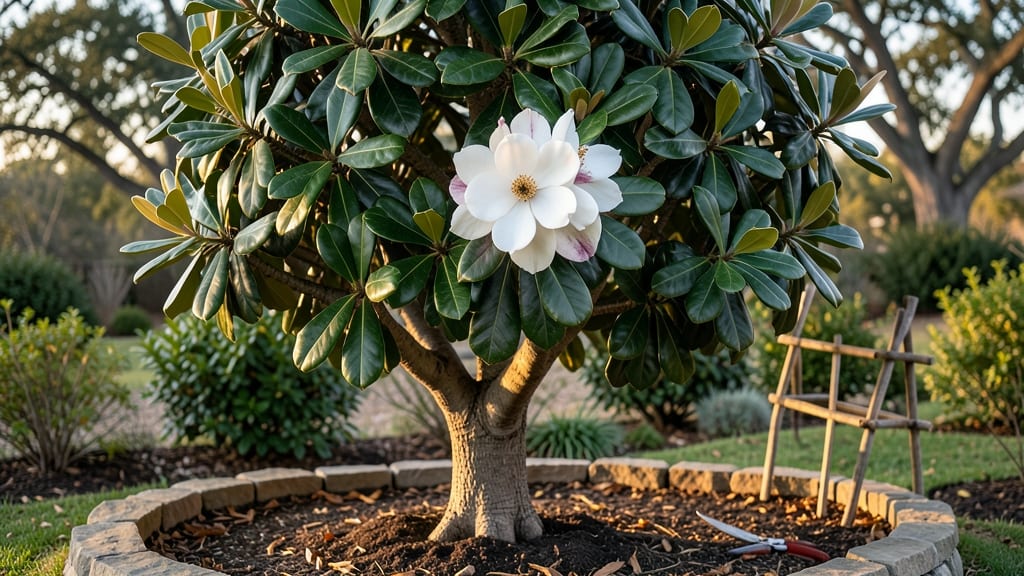
Big flowering trees aren’t just about spring blooms—they’re the showstoppers that turn your yard into a year-round living masterpiece with minimal fuss. 🌸 I’ve planted enough to know that the right species (think magnolias or crepe myrtles) delivers fragrant blossoms, lush foliage, and seasonal color without the pruning headaches of smaller trees.
The key? Matching your climate, sunlight, and space to a tree that thrives effortlessly—because nobody has time for high-maintenance drama. The magic happens in the spacing and placement: position these giants where they’ll cast cool shade in summer while letting winter sunlight filter through their bare branches.
Pair them with low-growing perennials or ornamental grasses to highlight their trunks and create layers of interest. My 20-foot crepe myrtle now anchors the backyard, its summer blooms outshining anything I’ve planted nearby—plus, it stays healthy with one deep watering per week once established.
What you end up with is a low-maintenance centerpiece that grows more beautiful each year. The early spring blooms of cherry blossoms, the summer drama of hibiscus, and the autumn foliage of red maples ensure your yard stays the envy of the neighborhood. And the best part?
You’ll spend less time pruning and more time admiring the results. Works for city lots, suburban backyards, or rural properties—just pick the right species for your zone. Let’s get your landscape transformed without the upkeep.
📚 In This Guide
- What you need
- Instructions
- Tips and common mistakes
- Wrapping up and next steps
What you need
- ● Big flowering tree saplings: Choose from varieties like Magnolia grandiflora, Crabapple (Malus spp.), or Japanese Maple (Acer palmatum). Select 3–5 gallon pots for mature trees or 1–3 gallon pots for smaller specimens.
- ● High-quality potting mix: 2–3 cubic yards of well-draining soil amended with compost (20% of the mix) for nutrient-rich growth.
- ● Organic mulch: 3–4 inches of wood chips or pine straw to retain moisture and suppress weeds.
- ● Slow-release fertilizer: 10–20 lbs of balanced 10-10-10 or organic options like fish emulsion for initial planting.
- ● Shovel or spade: For digging holes 3x wider and slightly deeper than the root ball.
- ○ Garden fork or tiller: To loosen compacted soil (optional but helpful for heavy clay).
- ● Pruning shears: Bypass pruners (for clean cuts) and loppers (for thicker branches).
- ● Wheelbarrow: For transporting soil, mulch, or tools.
- ● Measuring tape: To ensure proper spacing (15–25 feet apart for mature trees).
- ● Watering can or hose with nozzle: For deep watering (1–2 gallons per tree initially).
- ● Sunlight assessment: Most big flowering trees thrive in full sun (6+ hours/day). Test your site before planting!
- ● Soil test: Check pH (ideal: 6.0–7.0) and amend if needed (e.g., lime for acidic soil).
- ● Local climate zone: Verify hardiness zones (e.g., Magnolias prefer zones 5–9).
- ● Permits (if applicable): Check local regulations for large tree planting in urban areas.
- ● Tree stakes & ties: For young trees in windy areas.
- ● Drip irrigation system: Automates watering for minimal upkeep.
- ● Mycorrhizal fungi: Boosts root growth (mix into planting hole).
- ● Seasonal care kit: Includes tree wound paint (minimal use!) and insect repellent.
Step-by-Step guide to planting and maintaining big flowering trees
Here's how to establish these showstopping trees with lasting beauty and minimal fuss.
🌱 Step 1: Choose the Right Location for Year-Round Impact
Big flowering trees need at least 6 hours of direct sunlight daily for optimal bloom production, but some varieties like crape myrtle or dogwood tolerate partial shade. Measure your space: mature canopies reach 30-50 feet wide, so plant at least 20 feet from structures to avoid root competition and future pruning headaches.
Test the soil pH with a simple test kit—most flowering trees prefer slightly acidic to neutral (6.0-7.0). Amend heavy clay soil with 2-3 inches of compost mixed into the top 12 inches of planting hole. The goal is well-draining soil that retains moisture without becoming waterlogged, which causes root rot in these thirsty giants.
🪴 Step 2: Plant with Proper Technique for Strong Establishment
Dig a hole twice as wide as the root ball but no deeper—this encourages outward root growth rather than circling roots that strangle the tree. Gently loosen any circling roots on container-grown trees with your fingers (never cut them). Place the tree so the top of the root ball sits 1-2 inches below grade—this prevents stem rot from sitting water.
Backfill with the original soil (no amendments) and water deeply to settle everything. Create a 4-inch-high berm around the outer edge of the hole to direct water toward the roots during irrigation. Mulch with 3 inches of shredded bark in a 3-foot diameter circle, keeping mulch 6 inches away from the trunk to prevent moisture buildup that causes rot.
☀️ Step 3: Water Strategically for First-Year Success
Water deeply 2-3 times per week during the first growing season, providing 10-15 gallons per watering for established trees. Check moisture by pushing a screwdriver 6 inches into the soil—if it meets resistance, water again. Overwatering is the #1 killer of young flowering trees; let the top 2 inches of soil dry between waterings to develop deep roots.
Real talk: Most people overwater because they see wilting leaves. Big flowering trees like crape myrtle and magnolia naturally droop in heat—they perk up after sunset when temperatures drop. Only intervene if the leaves feel crispy to the touch. Fertilize lightly in spring with slow-release granular fertilizer (follow package rates) to avoid burning tender new roots.
✂️ Step 4: Prune Only When Absolutely Necessary
Wait until late winter or early spring (before buds swell) to remove dead, diseased, or crossing branches—never prune in fall, as this invites fungal infections before dormancy. Use clean, sharp pruners to make cuts at a 45-degree angle just outside the branch collar (the swollen area where the branch meets the trunk). This prevents unsightly stubs that attract pests.
For structural pruning, remove no more than 25% of the tree's canopy in any single season. The goal is to maintain an open center that allows sunlight to reach all branches, which encourages even flowering throughout the tree. Thin out crowded branches first, then shorten only the outermost growth. Seal no cuts larger than 1 inch in diameter with pruning sealant to prevent disease entry.
Tips & tricks for perfect big flowering trees
Common pitfalls—and how to sidestep every one when establishing these showstopping giants.
Sunlight Strategy: That 6-hour sunlight minimum is non-negotiable for peak blooms, but here's the thing: morning sun (east-facing) is more valuable than afternoon sun. Trees like crape myrtle and dogwood actually appreciate a bit of afternoon shade in hot climates to prevent leaf scorch. If your site only gets 4-5 hours of direct sun, consider shade-tolerant varieties like serviceberry or fringe tree.
Root Ball Revelation: When loosening those circling roots in Step 2, don't just pull at them—gently tease them apart with your fingers like you're untangling headphones. I learned this the hard way after seeing roots wrap around the trunk like a python. This outward growth pattern is what gives your tree its long-term stability and access to nutrients.
Watering Wisdom: The 2-3 times per week guideline assumes average conditions, but your local climate makes all the difference. In desert areas, you might need daily waterings during the first summer, while Pacific Northwest gardens could stretch that to once weekly. Always check that 6-inch depth—if your screwdriver meets resistance, it's time to water again. This simple test prevents both overwatering and underwatering.
Pruning Precision: That 25% canopy limit during pruning might sound strict, but here's why it matters: flowering trees produce buds on old wood, so aggressive cuts remove next year's blooms. When thinning branches in Step 4, focus on removing entire branch collars rather than just the ends. This maintains the tree's natural shape while preserving its flowering potential.
Pro Tips for Big Flowering Trees
- Common pitfalls—and how to sidestep every one when establishing these showstopping giants.
- Sunlight Strategy: That 6-hour sunlight minimum is non-negotiable for peak blooms, but here's the thing: morning sun (east-facing) is more valuable than afternoon sun.
- Root Ball Revelation: When loosening those circling roots in Step 2, don't just pull at them—gently tease them apart with your fingers like you're untangling headphones.
Frequently asked questions
Got questions about big flowering trees? You’re not alone!
Here are answers to the most common queries to help you choose the perfect specimen for your landscape—with zero stress.
What are the best low-maintenance big flowering trees for small yards?
If space is tight, opt for smaller-but-stunning varieties like the Japanese Snowbell (Styrax japonicus) or Fringe Tree (Chionanthus virginicus). Both thrive in tight spots, bloom prolifically, and require minimal pruning. Just ensure they get 6–8 hours of sunlight daily for optimal growth.
How long does it take for big flowering trees to mature and bloom?
Most big flowering trees take 3–5 years to reach maturity and start blooming, though some like the Crabapple (Malus spp.) may flower in as little as 2 years. Patience pays off—once established, they’ll reward you with decades of vibrant blooms with minimal effort!
Can I plant a big flowering tree in a pot or container?
While possible, big flowering trees are not ideal for containers long-term—their roots outgrow pots quickly. If you’re set on container gardening, choose dwarf varieties like the Dwarf Korean Lilac (Syringa meyeri) and upgrade to a 15+ gallon pot with excellent drainage. Expect to repot every 2–3 years.
Are big flowering trees drought-tolerant once established?
Many are! Trees like the Oakleaf Hydrangea (Hydrangea quercifolia) and Crape Myrtle (Lagerstroemia) develop deep root systems that make them highly drought-resistant after the first year. Still, mulch heavily and water deeply during the first growing season to help roots establish.
Do big flowering trees attract bees or other pests?
Yes, but it’s a good thing! Flowering trees support pollinators like bees and butterflies. To minimize pests, avoid over-fertilizing (which attracts aphids) and prune dead or diseased branches promptly. Most trees handle pests naturally—just enjoy the ecosystem boost!
Which big flowering trees thrive in cold climates?
For chilly regions (Zones 3–5), prioritize hardy species like the Serviceberry (Amelanchier), Viburnum (Viburnum spp.), or Magnolia (Magnolia stellata). These beauties bloom early, tolerate frost, and often produce edible berries—a win-win for wildlife and curb appeal!
Wrapping up and next steps
Big flowering trees are the ultimate low-maintenance stars of your landscape—offering stunning blooms, year-round shade, and minimal pruning demands. Whether you’re drawn to the Royal Empress Tree’s vibrant pink flowers or the Japanese Pagoda Tree’s delicate white blossoms, these giants deliver beauty and ease.
Ready to transform your outdoor space? Start by researching the best species for your climate, then plant with confidence—your future self (and your neighbors!) will thank you.
Next step: Pick your favorite tree and schedule a planting date—spring or early fall are ideal! 🌱