Flowers
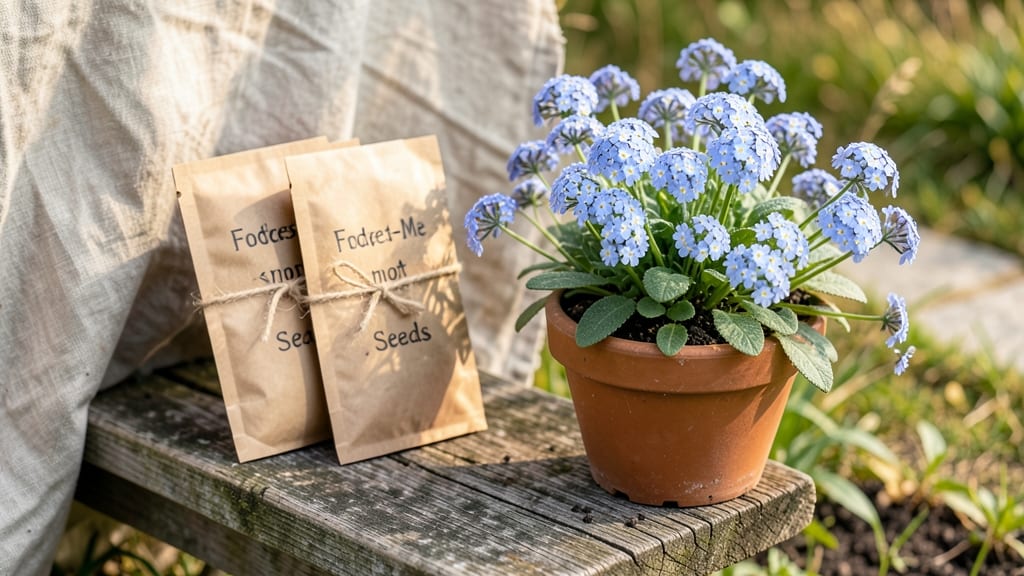
Growing forget-me-not flower seeds is like inviting tiny blue fairies into your garden—delicate, cheerful, and impossible to resist. 🌿 These pollinator magnets bloom in just 60 days, turning bare spots into pockets of color that hum with bees and butterflies.
The secret lies in starting them early indoors, where they’ll germinate reliably before the last frost, giving you a head start on that dreamy cottage-garden charm.
You’ll need a sunny windowsill or grow light, a shallow tray with well-draining soil, and patience for their slow but steady growth. Forget-me-nots thrive in cool weather, so spring planting is ideal—think March or April in most zones.
The soil should stay consistently moist but never soggy, and once seedlings pop up (usually in 10-14 days), thin them to 6 inches apart to prevent crowding. Their fern-like foliage is just as pretty as their blooms, so don’t rush the process.
By midsummer, you’ll be rewarded with clusters of sky-blue flowers that nod gently in the breeze, perfect for cutting or letting pollinators feast on. The key to keeping them blooming is deadheading spent flowers and ensuring they don’t dry out during heatwaves.
These little charmers also make stunning companions for tulips, roses, or along garden paths—wherever you want a touch of whimsy and color.
Even if your first batch struggles with leggy seedlings or slow germination, don’t give up. Forget-me-nots are forgiving once established, and their self-seeding habit means they’ll often return year after year.
With a little care, you’ll have a garden that feels like a storybook—one that bees and butterflies can’t resist visiting.
📚 In This Guide
- What you need
- Instructions
- Tips and common mistakes
- Wrapping up and next steps
What you need
- ● Forget me not flower seeds – 1 packet (approx. 50-100 seeds) (choose heirloom or pollinator-friendly varieties like Myosotis sylvatica)
- ● Seed-starting soil or potting mix – 1 small bag (8-12 qt) (lightweight, well-draining blend)
- ● Seed trays or small pots – 6-12 units (2-3" deep) (biodegradable pots are eco-friendly!)
- ● Watering can or spray bottle – with a fine mist nozzle (gentle watering is key!)
- ○ Grow lights or sunny windowsill – 6+ hours of light daily (optional but helpful for indoor starts)
- ○ Gloves (optional) – to protect hands from soil
- ● Plant labels & marker – to track varieties (forget me nots are tiny—labels help!)
- ● Fertilizer (balanced or low-nitrogen) – 5-10-5 or organic option (diluted to half-strength for seedlings)
- ● Transplanting tools – small trowel or spoon (for delicate seedlings)
- ● Outdoor garden bed or container – well-draining, partial shade to full sun (forget me nots love cool spots!)
- ○ Cold stratification (optional but helpful): Chill seeds in the fridge for 2-4 weeks before planting to mimic winter—boosts germination!
- ● Pollinator-friendly add-ons: Plant near bee balm, borage, or clover to create a buzzing garden!
Step-by-Step instructions for growing forget-me-nots from seed
Here's how to coax these delicate pollinator magnets from tiny seeds into a vibrant border.
🌱 Step 1: Prepare Your Seed Starting Mix and Trays
Fill your seed trays with the sterile seed-starting mix—never garden soil, as its density slows germination. Forget-me-not seeds are tiny, so use a fine mesh tray or press them into the surface of a well-draining mix with 20% perlite. Moisten the mix until it's damp but not saturated, then let it sit for 10 minutes to settle.
Press the soil down lightly with your fingers—just enough to create a firm surface. Forget-me-not seeds need good contact with the soil to germinate properly. I like to use a small wooden board to gently press the soil after sowing, which helps ensure even seed-to-soil contact without compacting too much.
💧 Step 2: Sow Seeds and Create a Humid Environment
Sprinkle the seeds sparingly—they're so small that a pinch covers a large area. Forget-me-not seeds don't need light to germinate, so you can press them just below the surface (about ⅛ inch deep). Cover the tray with a clear plastic dome or plastic wrap to maintain 90% humidity—these seeds need moisture to wake up.
Place the tray in a warm spot (around 65-70°F)—a seedling heat mat helps if your home runs cooler. Check daily for condensation on the plastic; if it's heavy, lift the dome for 10 minutes to prevent fungal growth. Germination typically takes 14-21 days, but don't be surprised if some seeds take longer—patience is key with these delicate blooms.
☀️ Step 3: Provide Gentle Light and Prevent Legginess
Once seedlings emerge, remove the plastic dome immediately to prevent damping-off. Place them under bright, indirect light for the first week—direct sun will scorch their tender leaves. Forget-me-nots are shade-tolerant, but seedlings need 12-14 hours of light daily to grow sturdy.
If you notice seedlings stretching toward the light with pale, elongated stems, they're leggy—a sign of insufficient light. Move them within 3-4 inches of a grow light or south-facing window. Strong seedlings will have small, dark green leaves and compact spacing between stems.
🪴 Step 4: Transplant to Individual Pots
When seedlings develop 2-3 true leaves (about 4-6 weeks after sowing), transplant them into 2-inch pots filled with the same light, well-draining mix. Handle them gently—these plants have delicate roots and transplant shock easily. Water lightly after transplanting to settle the soil around the roots.
Forget-me-nots thrive in cool conditions, so avoid placing them in hot, dry spots. If your home runs warm, keep them in a cool basement or unheated garage during the day and bring them indoors at night. This temperature fluctuation mimics their natural alpine habitat and encourages bushier growth.
⏰ Step 5: Harden Off and Plant Outdoors
Two weeks before your last frost date, begin hardening off seedlings by placing them outside in a shaded, sheltered spot for 1-2 hours the first day. Gradually increase their outdoor time over 10-14 days, exposing them to morning sun first. Forget-me-nots prefer partial shade in hot climates, so avoid full afternoon sun.
When planting outdoors, space seedlings 6-8 inches apart in moist, well-draining soil. They tolerate clay soil but struggle in waterlogged conditions—amend heavy soil with compost if needed. Water deeply after planting to encourage root growth, and mulch with 1 inch of organic mulch to retain moisture and suppress weeds.
Tips & tricks for perfect forget-me-not blooms
Here's what nobody tells you about growing these delicate pollinator favorites—tricks that'll make all the difference in your success rate.
Soil Contact is Everything: Forget-me-not seeds are so tiny that even a light breeze can scatter them before they germinate. In Step 1, after pressing the seeds into the soil, I recommend using a spray bottle to mist the surface—this helps settle any loose seeds deeper into the mix. The 10-minute settling time is crucial; don't rush this step even if you're eager to see sprouts. I've learned the hard way that impatient gardeners often end up with patchy germination because they moved the trays too soon.
Humidity Control: That 90% humidity requirement in Step 2 isn't just a suggestion—it's non-negotiable for these alpine natives. If you notice condensation dripping off the plastic, it's time to lift the dome for 10 minutes to prevent fungal growth. I keep a small fan nearby to gently circulate air during these ventilation breaks, which mimics natural airflow without shocking the seeds. The key is balance: too much humidity causes rot, too little causes desiccation.
Light Strategy: The 12-14 hours of light daily in Step 3 should be bright but diffuse during the first week. I've found that placing seedlings under a sheer curtain near a south-facing window works better than direct sunlight, which can scorch their tender leaves. For indoor growers, a simple LED grow light on a timer is worth the investment—it prevents leggy seedlings that collapse when transplanted. Watch for that 3-4 inch distance from the light source; any closer and you'll get bleached leaves.
Transplant Timing: Waiting for 2-3 true leaves before transplanting in Step 4 is about more than just size—it's about root development. I've seen gardeners rush this step and end up with plants that bolt to flower too quickly, producing weak stems. When you do transplant, I recommend using a chopstick or pencil to gently loosen the soil around the roots before moving them to pots. This minimal disturbance helps them establish faster in their new containers.
Pro Tips for Forget Me Not Flower Seeds
- Here's what nobody tells you about growing these delicate pollinator favorites—tricks that'll make all the difference in your success rate.
- Soil Contact is Everything: Forget-me-not seeds are so tiny that even a light breeze can scatter them before they germinate.
- Humidity Control: That 90% humidity requirement in Step 2 isn't just a suggestion—it's non-negotiable for these alpine natives.
Frequently asked questions
Got questions about growing forget me not flower seeds? You’re not alone! Here are some of the most common queries—and their easy answers—to help you cultivate a vibrant pollinator garden in no time.
How long do forget me not seeds take to germinate?
Most forget me not seeds sprout within 10–21 days when kept in consistent moisture (60–70°F) and indirect light. For faster results, pre-soak seeds in warm water for 4–6 hours before planting. Patience pays off—these delicate blooms are worth the wait!
Can I grow forget me nots from seeds indoors before transplanting?
Start seeds indoors 4–6 weeks before your last frost date. Use seed trays with well-draining soil, cover lightly with peat moss, and keep them under grow lights (12–14 hours/day). Harden off seedlings for 7–10 days before moving them outdoors to avoid shock.
Why aren’t my forget me not seeds sprouting?
Common culprits include overwatering (which causes rot), poor drainage, or temperature fluctuations (below 50°F). Try these fixes: use a seed-starting mix, keep soil damp (not soggy), and place trays on a heat mat (70°F+). If seeds are old (>2 years), test viability by soaking a few in water—sinkers are still good!
Are forget me nots annuals or perennials?
They’re tender perennials in USDA zones 3–9 but are often grown as annuals elsewhere due to their short lifespan (1–2 years). For repeat blooms, reseed yearly or plant in containers—this ensures a steady supply of nectar for bees and butterflies!
What’s the best companion plant for forget me nots?
Pair them with low-growing perennials like creeping thyme, alyssum, or sweet alyssum for a pollinator paradise. Avoid tall plants that shade them out; forget me nots thrive in partial sun (4–6 hours/day) with moist, well-drained soil. Pro tip: Add a slow-release fertilizer at planting for extra vigor!
Wrapping up and next steps
Growing forget me not flower seeds is a rewarding journey that brings vibrant blooms and joy to your garden in just 60 days—while supporting vital pollinators like bees and butterflies! 🌸 These delicate, cheerful flowers are perfect for adding color, texture, and a touch of nostalgia to any space.
Whether you're a beginner or a seasoned gardener, their easy-care nature makes them an ideal choice for quick, beautiful results.
Now that you’re equipped with the right seeds, tools, and tips, it’s time to plant and watch your garden transform. Grab your gloves, find a sunny spot, and let the magic of these pollinator-friendly blooms unfold. Happy gardening! 🌱✨