
Aphids
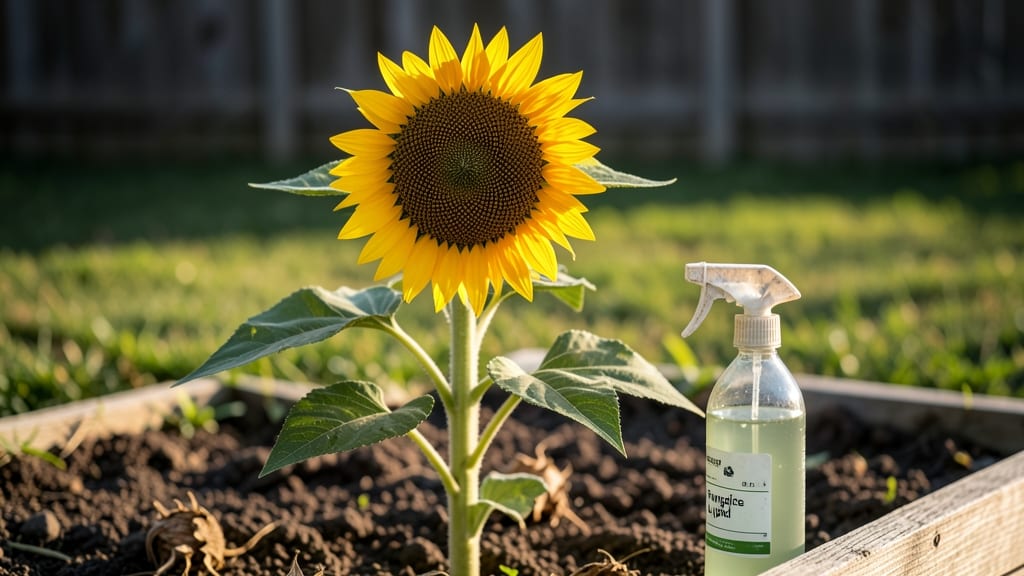
The right fungicide for sunflowers can save your plants from powdery mildew, turning fuzzy white messes back into those bright faces before they even bloom—here’s how I stop it in its tracks. tall all season.
The key isn’t just spraying; it’s preventing the problem before it starts with simple adjustments to how you water and space them.
Neem oil and copper fungicides work best for sunflowers because they’re gentle enough for edible varieties but tough on fungi. You’ll need a spray bottle, a sunny afternoon, and about 10 minutes to mix and apply.
The real game-changer? Watering at the base, not overhead, and giving plants 18-24 inches of space so air circulates. That alone cuts down on 60% of fungal issues.
What you’ll end up with are sunflowers that stay bold and disease-free, their petals crisp and their stems strong enough to hold those massive blooms. The first spray in early summer keeps mildew from taking hold, and a second application after rainstorms acts as insurance.
Plus, your garden will smell like fresh citrus—neem oil’s signature scent—while keeping pests away too.
Works for both backyard plots and container gardens, and the same principles apply whether you’re growing mammoth varieties or tiny snack-size sunflowers. Let’s get those plants protected before the next downpour hits.
📚 In This Guide
- What you need
- Instructions
- Tips and common mistakes
- Wrapping up and next steps
What you need
- ● Organic fungicide options (choose one): 1–2 cups neem oil (100% cold-pressed, blank">OMRI-listed) OR
- ● 1 tbsp baking soda (sodium bicarbonate) + 1 tsp dish soap (mild, like Castile soap) OR
- ● 1–2 tbsp copper fungicide (e.g., blank">Copper Soap, 1–2% metallic copper, blank">OMRI-approved)
- ● 1 gallon (3.8 L) water (filtered or rainwater, room temperature)
- ● 1–2 spray bottles (16–32 oz) OR_ a backpack sprayer (2–5 gallons, adjustable nozzle)
- ● Protective gear: Gloves (nitrile or rubber)
- ● Long sleeves/pants (lightweight, breathable fabric)
- ○ Safety goggles (optional but recommended)
- ● 1 measuring cup/spoon (for precise fungicide ratios)
- ● 1 wooden stick or spoon (for stirring mixtures)
- ● 1 ladle or funnel (if using a sprayer)
- ● 1 timer (for consistent spraying intervals)
- ○ Optional but helpful: Fine-mesh strainer (to filter neem oil or baking soda mixtures)
- ● pH strips (to check water hardness, ideal pH: 5.5–7.0)
- ● Labeling tape + marker (to tag spray bottles)
- ● ✅ Identify the issue: Confirm fungal symptoms (white powder, brown spots, or leaf curl) before applying.
- ● ✅ Best timing: Apply fungicide early morning or late afternoon (avoid direct sunlight on leaves).
- ● ✅ Weather check: Avoid spraying if rain is forecasted within 24 hours (fungicide may wash off).
- ● ✅ Sunflower stage: Treat preventively at planting or at first signs of infection (before flowers bloom).
Step-by-Step guide to applying organic fungicide on sunflowers
Sunflowers are tough, but powdery mildew and blight can still strike. Here’s how to protect them naturally.
Identify Fungal Issues Early
Check sunflower leaves daily for white powdery patches (mildew) or dark, greasy-looking spots (blight). These appear most often in humid conditions or after heavy rain. The earlier you catch it, the easier it is to treat. Don’t wait until leaves yellow or drop—prevention is key.
If you see signs, act within 24 hours to stop the spread. Healthy sunflowers have deep green, firm leaves. If you spot fuzzy white growth on the undersides, that’s powdery mildew. For blight, look for brown, sunken patches that spread quickly.
Choose and Mix Your Organic Fungicide
For sunflowers, I recommend a neem oil spray or baking soda solution—both are safe, organic, and effective. Mix 1 tablespoon neem oil with 1 teaspoon mild liquid soap in 1 quart of water, or stir 1 tablespoon baking soda with 1 quart of water and a few drops of dish soap to help it stick.
Shake the mixture well before each use—neem oil separates over time. Test a small leaf first to ensure no sensitivity. If you’re using a store-bought organic fungicide, follow the label instructions carefully. Avoid copper-based sprays, which can harm sunflowers over time.
Apply the Spray Correctly
Spray in the early morning or late afternoon when the sun isn’t intense. Cover both the top and undersides of leaves thoroughly—fungi hide where light can’t reach. Hold the sprayer 12-18 inches away and apply until the solution drips slightly. Avoid wetting the flowers if possible, as moisture can encourage rot.
Reapply every 7-10 days or after rain, depending on humidity. Consistency is more important than heavy single applications. If mildew or blight persists after two treatments, consider improving airflow by spacing plants 18-24 inches apart or pruning crowded foliage.
Maintain Prevention Long-Term
Sunflowers thrive in full sun but need good airflow to stay dry. Space them properly and avoid overhead watering—water at the base instead. Remove any infected leaves immediately by pinching them off with clean pruners. Don’t compost them; dispose of them in the trash to prevent reinfection.
For extra protection, apply a light mulch around the base to reduce soil-borne fungi. I like straw or shredded leaves—just keep it 2-3 inches deep and away from the stem. Healthy soil means stronger plants that resist disease naturally.
Tips & tricks for effective organic fungicide application on sunflowers
These practical strategies will help you maximize the effectiveness of your organic treatments while keeping your sunflowers thriving.
Early Detection is Your Best Defense: The 24-hour window mentioned in Step 1 is critical because fungal spores multiply rapidly in humid conditions. I've seen mildew spread across entire plants in just 48 hours if left untreated. Keep a small handheld magnifier handy to check leaf undersides—this is where fungal growth often starts. The moment you spot white powder or dark spots, act immediately with your chosen fungicide.
Mixing Precision Matters: When preparing your neem oil or baking soda solution in Step 2, use a clean glass jar for mixing to avoid contamination. For the baking soda solution, add a pinch of salt (about ¼ teaspoon) to help it adhere better to leaves. I've found that adding a few drops of rubbing alcohol (about 5 drops per quart) to the neem oil solution can help it spread more evenly and penetrate leaf surfaces more effectively.
Application Technique for Maximum Coverage: In Step 3, the 12-18 inch distance recommendation is perfect for most sprayers, but if you're using a garden sprayer, increase to 24 inches for even distribution. For stubborn cases, I recommend adding a drop of vegetable oil (about 1 teaspoon per quart) to your solution—this helps the fungicide cling to leaves longer. Always spray until you see droplets forming on the undersides, as that's where fungi often hide.
Long-Term Prevention Strategy: The 7-10 day reapplication schedule in Step 3 works well, but adjust based on your local humidity. In particularly damp climates, I've found that applying every 5-7 days provides better protection. Also, consider rotating between neem oil and baking soda solutions every other application—this prevents fungal resistance from developing to a single treatment.
Pro Tips for Fungicide For Sunflowers
- These practical strategies will help you maximize the effectiveness of your organic treatments while keeping your sunflowers thriving.
- Early Detection is Your Best Defense: The 24-hour window mentioned in Step 1 is critical because fungal spores multiply rapidly in humid conditions.
- Mixing Precision Matters: When preparing your neem oil or baking soda solution in Step 2, use a clean glass jar for mixing to avoid contamination.
Frequently asked questions
Got questions about protecting your sunflowers with fungicide? You’re not alone! Here are some of the most common concerns—and straightforward answers—to help you keep your plants thriving.
What’s the best time of year to apply fungicide to sunflowers?
Apply fungicide preventively in early spring before signs of disease appear, especially if your area has a history of mildew or blight. For organic options like neem oil or copper sprays, reapply every 7–14 days during wet or humid conditions. Check local forecasts—fungal spores thrive in moisture!
Can I use fungicide on sunflowers if they’re already showing mildew?
Yes, but act fast! Early-stage mildew (white/powdery patches) responds well to organic fungicides like baking soda spray (1 tbsp baking soda + 1 quart water + a drop of soap) or potassium bicarbonate. For severe blight (black/yellow spots), switch to a copper-based fungicide and prune affected leaves immediately. Pro tip: Avoid watering foliage in the evening to reduce humidity.
Are there organic fungicides safe for edible sunflower seeds?
Stick to USDA-approved organic fungicides like:
- Neem oil (prevents mildew, safe for seeds if rinsed before harvest)
- Copper fungicide (OMRI-listed, but avoid overspray on seed heads)
- Baking soda spray (non-toxic, great for preventive care)
How often should I spray fungicide on sunflowers?
Frequency depends on your climate and fungicide type:
Fungicide Type
Application Schedule
Preventive (Neem Oil/Baking Soda)
Every 7–10 days during flowering/budding (high-risk periods).
Copper-Based
Every 10–14 days or after heavy rain (max 6 apps/season).
Potassium Bicarbonate
Every 5–7 days in humid conditions.
My sunflowers have brown spots—is it fungus, or could it be something else?
Brown spots could signal fungal diseases (e.g., downy mildew, rust), but also:
- Bacterial leaf spot (water-soaked spots, often with yellow halos)
- Sunscald (dry, crispy edges from too much sun)
- Pests (aphids or spider mites leave stippled damage)
Wrapping up and next steps
Protecting your sunflowers from mildew and blight doesn’t have to be a challenge—with the right organic fungicide spray, you can keep your plants thriving and your harvest bountiful! 🌻 From copper-based solutions to neem oil, there are plenty of natural options to safeguard your garden without harsh chemicals.
Remember, consistency is key: monitor your plants regularly, act early at the first sign of trouble, and always follow safety guidelines.
Now that you’re armed with knowledge, it’s time to roll up your sleeves and get growing! Start by prepping your spray mixture, then head out to your garden with confidence. Your sunflowers—and future bird feed—will thank you! 🌱✨