
Flowers
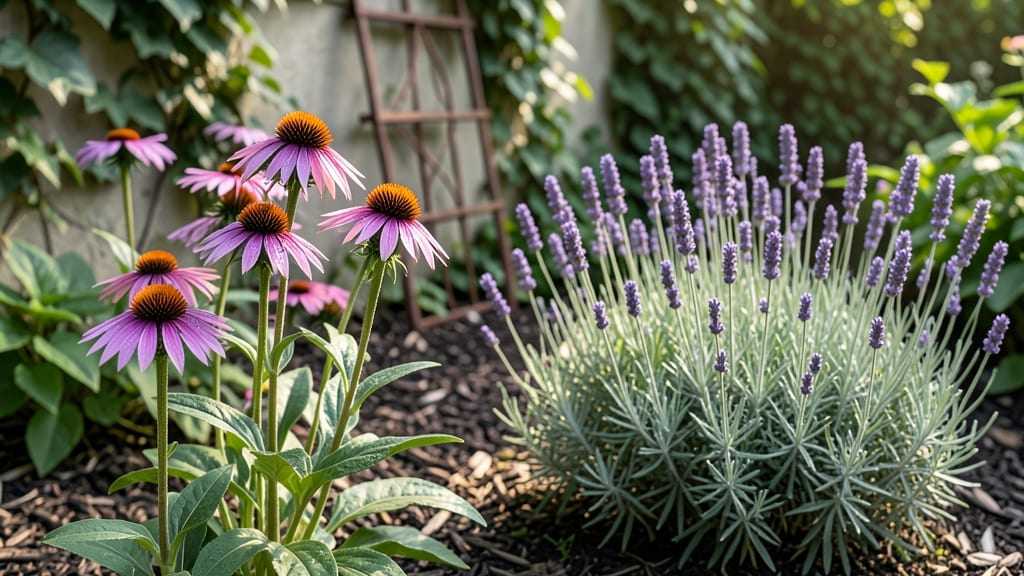
Lavender and coneflower together create a pollinator magnet that blooms from spring through fall. 🌿 The silvery lavender’s fragrance calms while the coneflower’s bold purple cones attract bees and butterflies—nature’s perfect duo. I discovered this pairing after struggling with a garden that looked pretty but never hummed with life.
Lavender thrives in dry soil and full sun, while coneflower handles slightly richer conditions—making them easy neighbors. Plant lavender in front for fragrance and height contrast, then let coneflower’s towering stems reach behind. Together, they fill gaps in bloom time: lavender starts early, coneflower takes over when it fades.
You’ll end up with a garden that smells like summer even in winter’s chill. The lavender’s scent lingers on breezes, while coneflower’s seed heads feed birds through frost. This combo works in borders, cottage gardens, or wildflower patches—no fancy layout required.
Bonus: Both are drought-tolerant once established, so they’re perfect for low-maintenance spaces. Start with a few plants to test your spot, then expand next season. The pollinators will thank you—and so will your senses.
📚 In This Guide
- What you need
- Instructions
- Tips and common mistakes
- Wrapping up and next steps
What you need
- ● Lavender plants: 3–5 mature plants (e.g., Lavandula angustifolia or Lavandula x intermedia), spaced 18–24 inches apart.
- ● Coneflower plants: 3–5 plants (e.g., Echinacea purpurea or Rudbeckia hirta), spaced 12–18 inches apart.
- ● Well-draining potting mix: 1–2 bags (for containers) or enrich soil with compost (for in-ground planting).
- ● Organic mulch: 2–3 cubic feet (e.g., wood chips or straw) to retain moisture and suppress weeds.
- ○ Slow-release fertilizer: 5–10 lbs (optional but recommended for nutrient-boosting).
- ● Garden trowel or spade (for digging).
- ● Gloves (to protect hands from thorns or prickly stems).
- ● Watering can or hose with a gentle nozzle (lavender hates soggy roots!).
- ● Pruning shears (for shaping and deadheading).
- ● Measuring tape or ruler (to ensure proper spacing).
- ● Sunlight access: Full sun (6+ hours daily) for both plants.
- ● Drought-tolerant location: Once established, these plants thrive with minimal watering.
- ● Pollinator-friendly companions: Add bee balm, salvia, or yarrow for extra buzz! 🐝
- ● Decorative rocks or pebbles (to enhance drainage in containers).
- ● Drip irrigation kit (for automated watering in dry climates).
- ● Handheld fan (to deter pests like aphids on lavender).
Step-by-step guide for planting lavender and coneflower together
Here's how to create a thriving, pollinator-friendly garden that blooms from spring through fall.
🌱 Step 1: Choose the Perfect Planting Sites
Lavender and coneflower thrive in full sun—at least 6-8 hours daily—but they have different soil preferences. Lavender demands well-draining soil with a pH between 6.5 and 7.5, while coneflowers tolerate slightly richer soil. To balance both, create two separate planting zones within 3-5 feet of each other—close enough for visual harmony but far enough to accommodate their distinct needs.
Dig a hole for each plant twice as wide as its root ball but only as deep as the container it came in. If your soil is heavy clay, mix in 1 part sand to 3 parts native soil for lavender. For coneflowers, a light amendment of compost (about 1 cup per plant) improves fertility without overwhelming the soil.
☀️ Step 2: Plant at the Right Depth and Spacing
Place lavender plants slightly deeper than they grew in containers—about 1 inch lower than the soil line—since their woody stems root along the buried portion. Space them 18-24 inches apart to allow airflow and prevent fungal issues. Coneflowers, on the other hand, should sit at the same depth as their container, with 24-36 inches between plants to accommodate their mature spread.
Fill the holes with soil, pressing gently to eliminate air pockets. Water deeply right after planting—1 gallon per plant—to encourage root contact with the soil. Here's the thing: Don’t fertilize at planting. Both lavender and coneflowers prefer lean soil, and excess nutrients can lead to weak growth or floppy stems.
💧 Step 3: Establish a Watering Routine for Long-Term Success
For the first 2-3 weeks, water deeply every 2-3 days until the soil feels dry 2 inches below the surface. Lavender is drought-tolerant once established, but young plants need consistent moisture to root. Coneflowers, meanwhile, appreciate 1 inch of water per week during their first growing season. After the initial phase, reduce lavender watering to once every 10-14 days unless your region experiences extreme heat.
Mulch lavender with 1 inch of gravel or coarse sand to prevent soil moisture from pooling around the base—this mimics its natural Mediterranean habitat. For coneflowers, use 2 inches of organic mulch, like shredded bark, to retain moisture and suppress weeds. Avoid piling mulch against the stems; keep it 2 inches away to prevent rot.
✂️ Step 4: Prune and Maintain for Continuous Blooms
Lavender needs light pruning right after flowering to encourage bushiness. Cut back one-third of the previous year’s growth with clean, sharp shears, but never trim into old wood—this can kill the plant. Coneflowers, however, benefit from deadheading spent blooms throughout the season to prolong flowering. Snip off faded flowers just above the next set of leaves to redirect energy into new growth.
In early spring, give lavender a light trim to shape it and remove any dead or leggy stems. Coneflowers rarely need pruning unless they become overcrowded, in which case you can divide them in early spring or fall. Real talk: Don’t over-prune lavender. It’s a slow grower, and aggressive cuts can leave it vulnerable to winter damage.
🪴 Step 5: Extend the Season with Seasonal Care
As summer heats up, lavender may go dormant—its leaves will turn brown and crispy. Don’t panic. This is normal, and the plant will rebound in cooler weather. Water sparingly during dormancy, just enough to keep the roots alive. Coneflowers, however, stay lush and continue blooming well into fall. If your region experiences hard frosts, cut back coneflower stems to 4-6 inches tall in late winter to encourage fresh growth.
In late fall, apply a 2-inch layer of mulch around coneflowers to insulate roots, but leave lavender uncovered. Both plants benefit from a light application of balanced fertilizer (like 10-10-10) in early spring—just half the recommended dose—to support new growth without overstimulating the plants.
Tips & tricks for perfect lavender and coneflower pairings
These practical insights will help you create a thriving garden that showcases both plants' unique strengths while preventing common pitfalls.
Soil Preparation Secret: Before planting lavender, test your soil's pH—it's the single most critical factor for its success. If your soil tests below 6.5, amend with crushed limestone (about 1/2 cup per square foot) and mix thoroughly. For coneflowers, a simple soil test will reveal if they need compost (1 cup per plant) or if your existing soil provides enough nutrients. The key is balancing these two plants' needs in their separate zones while keeping them visually cohesive in your design.
Planting Depth Visual Cue: When planting lavender, use the "thumb rule" for depth—press the plant in until the soil line is just below where your thumb naturally rests when holding the root ball. For coneflowers, maintain the same depth as their container to avoid stressing the roots. This subtle difference in planting depth makes all the difference in establishing strong root systems that will support years of blooms.
Watering Hack for Young Plants: After planting, create a watering well around each plant by pressing your finger about 2 inches into the soil to make a small depression. This ensures water reaches the roots rather than running off. For lavender, water deeply every 2-3 days until established, while coneflowers appreciate consistent moisture during their first growing season. The goal is to encourage root development without creating waterlogged conditions that invite fungal diseases.
Pruning Timing Strategy: Mark your calendar for lavender's post-flowering prune—this is typically 2-3 weeks after you notice the last blooms fade. Use a small flag or plant marker to remind yourself when to trim back one-third of the previous year's growth. For coneflowers, establish a monthly deadheading habit during their blooming season to extend their flowering period. This simple maintenance routine prevents overcrowding and keeps both plants looking their best throughout the growing season.
Pro Tips for Lavender And Coneflower
- These practical insights will help you create a thriving garden that showcases both plants' unique strengths while preventing common pitfalls.
- Soil Preparation Secret: Before planting lavender, test your soil's pH—it's the single most critical factor for its success.
- Planting Depth Visual Cue: When planting lavender, use the "thumb rule" for depth—press the plant in until the soil line is just below where your thumb naturally rests when holding the root ball.
Frequently asked questions
Can lavender and coneflower grow well together in the same garden bed?
Both thrive in full sun and well-drained soil, making them perfect companions. Lavender’s drought tolerance and coneflower’s deep roots complement each other—just avoid overcrowding. Space them 18–24 inches apart for airflow and easy maintenance.
What’s the best time to plant lavender and coneflower together?
Spring or early fall are ideal. Plant in spring after the last frost (lavender hates soggy roots) or in early fall (6–8 weeks before your first frost) to give roots time to establish. Avoid summer heatwaves—both plants stress easily when transplanted.
Will this duo attract too many pests or bees?
Not at all! Both are pollinator magnets—bees, butterflies, and hummingbirds adore them. If pests like aphids appear, spray with neem oil or introduce ladybugs. Just enjoy the show! Pro tip: Plant near herbs (like rosemary) to deter some pests naturally.
Can I grow lavender and coneflower in containers instead of a garden bed?
Yes, but with adjustments. Use large pots (12+ inches deep) with drainage holes and a sandy, fast-draining mix. Lavender needs smaller containers (5–7 gallons) to prevent root rot, while coneflower can handle bigger pots. Group them with other drought-tolerant plants like sedum for a mini pollinator paradise!
How do I protect lavender and coneflower from winter damage?
Lavender is hardy to USDA Zone 5, but mulch lightly (1–2 inches) with gravel or straw to insulate roots. Coneflowers (Zone 3–8) handle cold well—just cut back dead foliage in early spring. Avoid heavy mulch on lavender, which can suffocate it. Pro tip: Add a burlap wrap around young plants in harsh winters for extra protection.
Wrapping up and next steps
From vibrant pollinator magnets to year-round beauty, lavender and coneflower are a match made in gardening heaven! 🌸 Their effortless care, striking colors, and ecological benefits make them the perfect duo for any garden—whether you're a beginner or a seasoned green thumb.
Ready to transform your outdoor space? Start small with a single pot or go bold with a full border—just plant, water, and watch nature thrive!
💡 Next step: Grab your seeds or seedlings, pick a sunny spot, and let these powerhouses work their magic. Happy gardening!