
Trees
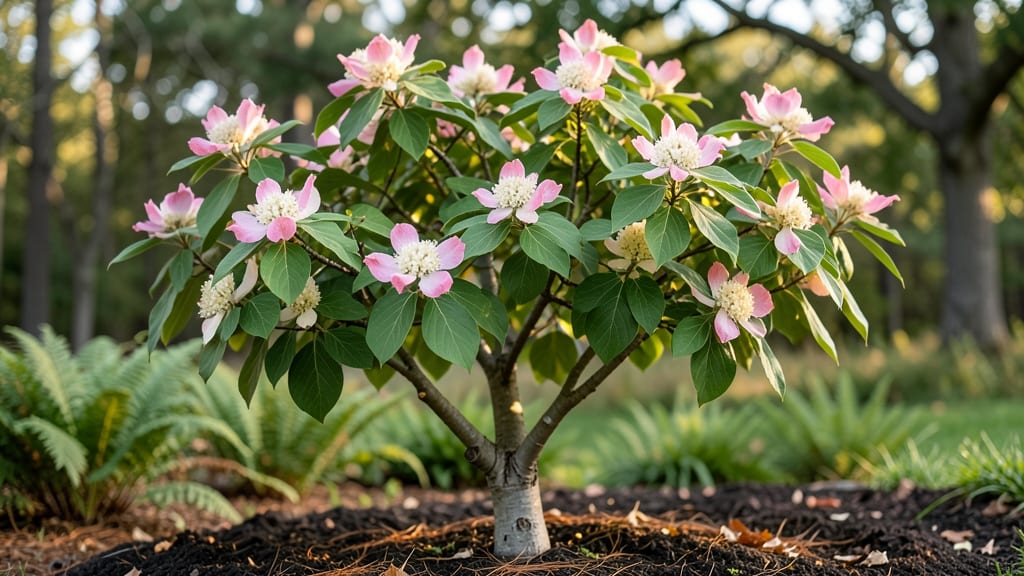
A pink flowering dogwood tree turns any garden into a living masterpiece with its stunning spring blooms and graceful year-round presence. 🌸 I remember the first time I saw one in full bloom—its delicate pink petals against fresh green leaves felt like a breath of spring magic.
This isn’t just a tree; it’s a statement piece that elevates any landscape with its elegant form and seasonal interest.
The secret to its charm lies in strategic placement: underplanted with ferns or hostas for texture contrast, or as a focal point in shade gardens where its blooms stand out beautifully.
Dogwoods thrive in well-drained soil and partial shade, making them perfect for woodland edges or as a dramatic backdrop for patios. Their four-season appeal—from spring flowers to fall color and winter bark interest—keeps your garden looking intentional all year.
Imagine your garden in late spring when clusters of pink bracts burst open, followed by vibrant red berries that birds adore. In autumn, the foliage turns a rich bronze, and even in winter, the exfoliating bark adds texture.
The tree’s arching branches create natural shade while framing views beautifully. Whether you’re designing a cottage garden or a modern landscape, this tree delivers effortless elegance.
For best results, pair it with shade-loving perennials like astilbes or heucheras to highlight its blooms. In larger spaces, consider planting multiple dogwoods for a dramatic, layered effect.
Their versatile beauty makes them a top choice for gardeners who want both impact and low-maintenance appeal. Let’s bring that springtime magic to your yard!
📚 In This Guide
- What you need
- Instructions
- Tips and common mistakes
- Wrapping up and next steps
What you need
- ● Pink Flowering Dogwood Tree: 1–3 plants (depending on desired spacing—20–25 feet apart for mature trees)
- ● Option 1: Bare-root saplings (spring planting) or potted 1–3 gallon containers (year-round)
- ● Option 2: Seeds (if propagating from seed—slower process, ~2–3 years to flower)
- ● Planting Site: Well-draining, slightly acidic soil (pH 4.5–6.0)
- ● Full sun to partial shade (4–6 hours of sunlight daily)
- ● Space for mature height: 15–25 feet tall, spread: 20–30 feet
- ● Tools: Shovel or trenching tool (for digging)
- ● Garden gloves (to protect hands)
- ● Pruning shears (for shaping or cleanup)
- ● Mulch (2–3 inches of pine bark or wood chips)
- ● Watering can or hose with gentle spray nozzle
- ● Soil amendment: Compost or peat moss (if soil is heavy or alkaline)
- ● Fertilizer: Slow-release, acid-loving plant fertilizer (apply in early spring)
- ● Tree stakes & ties (for young saplings in windy areas)
- ● Pest control: Neem oil or horticultural oil (preventative for aphids or scale)
- ● Drip irrigation system (for consistent moisture in dry climates)
How to plant and care for a pink flowering dogwood tree
Here’s the method I’ve used to establish thriving dogwoods with stunning seasonal displays.
🌱 Step 1: Choose the Perfect Planting Site
Pink flowering dogwoods (Cornus florida) thrive in partial shade to full sun—but here’s the key: they need morning sun and afternoon shade, especially in hot climates. Avoid deep shade, which weakens flowering. Test your site by observing how much sunlight reaches it between 10 AM and 2 PM. The ideal spot gets 4-6 hours of morning light and dappled shade the rest of the day.
Soil should be well-draining but consistently moist—dogwoods hate soggy roots. If your soil drains poorly, amend with 2-3 inches of organic matter (like compost) mixed into the top 12 inches of soil. The tree’s root system spreads widely but stays shallow, so avoid compacted or rocky ground.
🪴 Step 2: Plant at the Right Depth and Stake for Stability
Dig a hole twice as wide as the root ball but no deeper—dogwoods dislike having their roots buried too deep, which can cause root rot. Gently loosen the roots if they’re circling the root ball (a common nursery practice). Place the tree in the hole so the top of the root flare (where roots meet trunk) sits 1-2 inches above ground level. This prevents water from pooling around the trunk.
Backfill with native soil, tamping lightly every 4 inches to remove air pockets. Water deeply to settle the soil, then stake the tree only if needed—young dogwoods (under 3 feet tall) benefit from temporary support. Use two stakes positioned 6 inches from the trunk and tie with a soft tree tie (never wire, which can girdle the trunk). Mulch with 2-3 inches of shredded bark, keeping it 6 inches away from the trunk to prevent rot.
☀️ Step 3: Water Deeply and Adjust Care for Seasons
Water deeply once a week for the first year, ensuring moisture reaches 12 inches down. Dogwoods are drought-tolerant once established, but young trees need consistent moisture. Check soil moisture by sticking your finger 2 inches deep—if it’s dry, water again. Overhead watering can spread disease, so water at the base using a soaker hose or drip irrigation.
In winter, dogwoods need protection from salt spray (if near roads) and deicing chemicals. Apply a 2-3 inch layer of mulch in late fall to insulate roots. Prune only in late winter or early spring (before buds swell) to remove dead wood or crossing branches. Never prune in fall—it invites disease and weakens the tree before winter.
✂️ Step 4: Prune for Health and Flowering
Dogwoods flower on old wood, so prune after blooming (late spring) to avoid cutting off next year’s flowers. Remove dead, diseased, or weak branches first, then thin the canopy to improve airflow. Aim for an open center—this prevents fungal issues and lets light reach the lower branches, encouraging year-round interest from foliage and bark.
If your dogwood isn’t flowering well, check for over-fertilization (too much nitrogen = lush leaves, few blooms). Apply a balanced 10-10-10 fertilizer in early spring (follow label rates) and avoid high-phosphorus fertilizers, which promote leafy growth at the expense of flowers. Watch for dogwood borers—tiny holes in the bark signal an infestation. Treat with neem oil or beneficial nematodes if you spot damage.
Tips & tricks for perfect pink flowering dogwood planting
Real talk: The difference between a dogwood that thrives for decades and one that struggles starts with these often-overlooked details.
Lighting Strategy: I learned this the hard way after losing two dogwoods to weak flowering—morning sun (4-6 hours) is non-negotiable. Use a light meter app to test your spot between 10 AM-2 PM. If your yard gets harsh afternoon sun, consider planting near a north-facing wall or under deciduous trees that provide summer shade but allow winter sun.
Root Ball Preparation: Before planting, soak the root ball for 20-30 minutes to hydrate the roots. This helps reduce transplant shock, especially in dry conditions. Gently tease apart any circling roots with your fingers—this encourages outward root growth rather than girdling. Confession: I skipped this step for years and wondered why my dogwoods took so long to establish.
Mulching Mastery: That 2-3 inch layer of shredded bark isn't just decoration—it's insulation. Apply it immediately after planting and refresh annually in late fall. The key is keeping it 6 inches away from the trunk to prevent moisture buildup that causes rot. I've seen dogwoods with perfect mulch rings around their trunks thriving where poorly mulched ones struggle.
Pruning Precision: When you prune after blooming in late spring, focus on creating an open center rather than just removing dead branches. This improves airflow and lets light penetrate to lower branches, which encourages stronger growth and better flowering. I always make my cuts just outside the branch collar—the swollen area where the branch meets the trunk—to promote faster healing.
Pro Tips for Pink Flowering Dogwood Flowering Tree
- Real talk: The difference between a dogwood that thrives for decades and one that struggles starts with these often-overlooked details.
- Lighting Strategy: I learned this the hard way after losing two dogwoods to weak flowering—morning sun (4-6 hours) is non-negotiable.
- Root Ball Preparation: Before planting, soak the root ball for 20-30 minutes to hydrate the roots.
Frequently asked questions
Got questions about your pink flowering dogwood? You’re not alone! Here are answers to the most common queries—from timing tips to troubleshooting tricks.
When do pink flowering dogwoods bloom?
These showstoppers typically bloom in late spring to early summer (April–June, depending on your climate). Look for clusters of pink or white bracts (modified leaves) surrounding tiny yellow flowers. Pro tip: Plant in full sun for the most vibrant blooms!
How fast do pink flowering dogwoods grow?
Expect moderate growth—about 12–24 inches per year under ideal conditions. They mature to 20–35 feet tall with a spreading canopy. Patience pays off: their slow growth means long-lasting structure in your landscape.
Why aren’t my pink flowering dogwood leaves turning color in fall?
Dogwoods are not known for fall foliage (unlike maples or oaks), but their exfoliating bark and red berries add winter interest. If leaves are dull or sparse, check for overwatering, poor soil, or disease. Prune dead branches in late winter to encourage new growth.
Can I grow a pink flowering dogwood in a container?
While possible, they’re not ideal for containers—their root systems are large and woody. If you must, choose a huge pot (3+ feet wide) with well-draining soil and move it outdoors in warm months. For best results, plant in the ground where roots can spread freely.
What’s a good alternative if I want pink flowers but less maintenance?
Consider these low-maintenance pink bloomers:
- Japanese Maple (Acer palmatum): Stunning foliage + pink flowers (spring).
- Serviceberry (Amelanchier): Pink blooms + edible berries.
- Crabapple (Malus): Pink flowers + compact size.
Wrapping up and next steps
The pink flowering dogwood isn’t just a seasonal star—it’s a year-round masterpiece that brings charm, texture, and life to any garden. 🌸 From its breathtaking spring blooms to its vibrant fall foliage and even its winter structure, this tree delivers beauty in every season with minimal fuss.
Ready to transform your outdoor space? Start by choosing the perfect spot, gathering the right tools, and following our step-by-step guide. Whether you’re a seasoned gardener or a beginner, this tree is your ticket to effortless elegance—so roll up your sleeves and plant your future garden centerpiece today!