Flowers
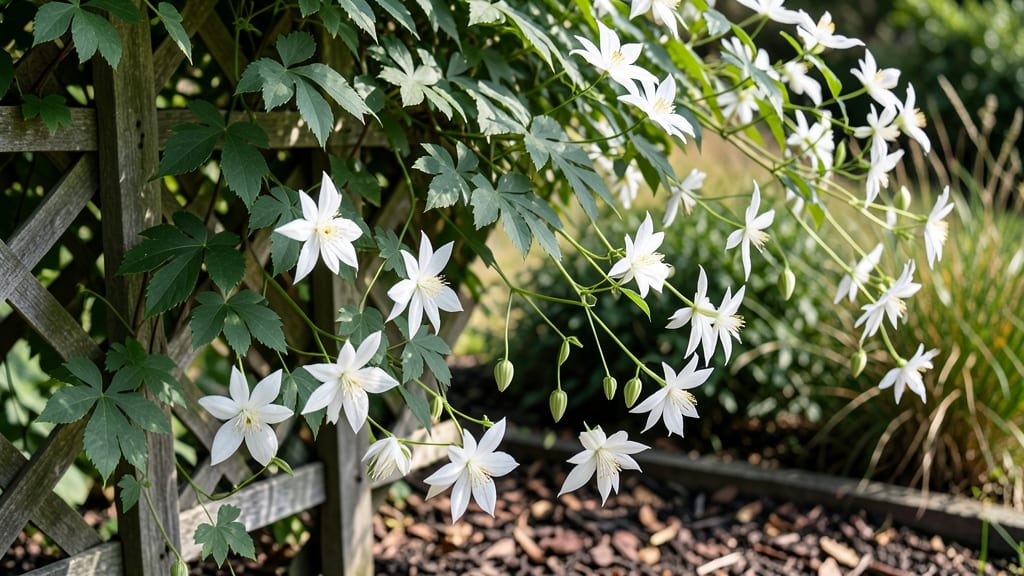
That vine with small white flowers climbing your fence might be clematis—the Pacific Northwest’s secret weapon for frost-tough climbers that thrive where others fail. 🌿 I’ve wrestled with these vines for years, and once you learn their quirks, they become the star of your garden, blooming reliably even after winter’s chill.
The key lies in matching their needs: the right spot, soil that drains but holds moisture, and a pruning schedule that keeps them vigorous.
Most people assume these vines need full sun, but in the PNW’s damp climate, they actually prefer morning sunlight and afternoon shade—think dappled light under tall trees or near north-facing walls. The soil should be rich but not soggy; amending with compost at planting time makes all the difference.
Water deeply once a week unless rain does the work, and you’ll see those delicate white blooms return year after year, even after hard freezes.
What sets clematis apart is how it transforms a garden: twining up trellises, spilling over arbors, or cascading from containers. The blooms attract pollinators, and the foliage stays lush long after summer fades.
Prune in early spring to shape the plant and encourage strong new growth—just avoid cutting back too aggressively, or you’ll miss the season’s first flowers. Pair it with hostas or ferns for a shade-loving combo that feels effortlessly natural.
For PNW gardeners, clematis is the ultimate low-maintenance climber—drought-tolerant once established, disease-resistant in our cool climate, and happy in containers or ground plantings.
Start with a hardy variety like ‘Jackmanii’ or ‘Nelly Moser’ for guaranteed performance, and you’ll have a vine that outlasts trends and keeps your garden in bloom from spring to fall.
📚 In This Guide
- What you need
- Instructions
- Tips and common mistakes
- Wrapping up and next steps
What you need
- ● Vine with small white flowers: 1-2 plants (e.g., Clematis, Honeysuckle, or Star Jasmine—all frost-tolerant for PNW climates)
- ○ Optional: Seeds (if propagating from scratch) or cuttings (4-6 inches long)
- ● Soil: Well-draining garden soil (amend with compost or peat moss if clay-heavy)
- ○ Optional: 1-2 cups of slow-release fertilizer (10-10-10 ratio) mixed into planting hole
- ● Support structure: Trellis, arbor, or fence (6-10 feet tall, depending on vine variety)
- ○ Optional: Twine or soft ties for securing young vines
- ● Garden trowel or shovel
- ● Pruning shears (sterilized with rubbing alcohol)
- ● Watering can or hose with soaker nozzle
- ○ Optional: Mulch (2-3 inches of wood chips or straw to retain moisture)
- ○ Optional: pH test kit (ideal soil pH: 6.0–7.0 for most frost-resistant vines)
Step-by-step guide for planting and caring for a frost-resilient vine
Here’s how to grow a hardy climber that thrives in cool Pacific Northwest weather.
🌱 Step 1: Choose the Perfect Location and Prepare the Soil
Select a spot with partial shade to full sun—this vine handles both but prefers morning sun and afternoon shade in hotter summer months. The Pacific Northwest’s mild summers mean it won’t scorch in intense afternoon rays. Dig a hole twice as wide as the root ball but only as deep—planting too deep can suffocate the roots.
Amend the soil with 2-3 inches of compost mixed into the top 12 inches of soil. This vine tolerates a range of soil types but thrives in well-draining, slightly acidic to neutral soil (pH 6.0-7.0). If your soil is heavy clay, add a shovel of perlite or coarse sand to improve drainage. A soil test kit ensures you’re on the right track—this vine won’t fuss, but it rewards good prep.
🪴 Step 2: Plant and Stake for Support
Remove the vine from its container and loosen the roots gently if they’re circling. Place it in the hole so the top of the root ball sits level with the ground—burying too deep can cause rot. Backfill with native soil, pressing lightly to eliminate air pockets. Water deeply right away to settle the soil and encourage root contact.
Install a trellis, arbor, or sturdy fence nearby before planting—this vine grows 6-10 feet tall and needs support. Use soft ties or cloth strips to secure the main stems as they grow. Avoid wire or plastic ties that can cut into the bark. Here’s the thing—this vine climbs by twining, so the more you guide it early, the stronger and more upright it’ll grow. You’ll see new growth reaching for the trellis within 2-3 weeks if conditions are right.
☀️ Step 3: Water and Feed for Healthy Growth
Water deeply once a week during the first growing season, aiming for 1-1.5 inches of water per week. The Pacific Northwest’s frequent drizzle means you’ll rarely need to water more than that, but check the top 2 inches of soil—if it’s dry, it’s time. Overwatering leads to root rot, so let the soil dry slightly between waterings once established.
Fertilize once in early spring with a balanced, slow-release fertilizer (10-10-10). Sprinkle ½ cup around the base, then water deeply to activate it. This vine isn’t heavy-feeder, so skip summer fertilizing—it can encourage weak, leggy growth. Instead, mulch with 2-3 inches of shredded bark or wood chips in early spring to retain moisture and regulate soil temperature. You’ll notice stronger stems and more abundant blooms if you stick to this routine.
✂️ Step 4: Prune and Maintain for Abundant Blooms
Prune in late winter or early spring before new growth begins. Remove dead or crossing branches first—this improves airflow and reduces disease risk. Then, cut back any leggy growth by one-third to encourage bushier, more compact growth. This vine blooms on new wood, so don’t worry about trimming too aggressively.
After flowering, trim back spent blooms to encourage a second flush of flowers later in the season. Here’s where it gets fun—watch for small white flower clusters in late spring to early summer. They’ll attract pollinators like bees and butterflies, adding life to your garden. In fall, cut back any weak or damaged growth, but leave the structure intact for next year’s growth.
⏰ Step 5: Protect in Winter and Prepare for Next Season
This vine is frost-tolerant but benefits from a light layer of mulch (2-3 inches) in late fall to insulate the roots. Choose straw or leaves—they break down slowly and protect against temperature swings. If your winters are particularly harsh (below 10°F), wrap the younger stems with burlap or frost cloth for extra protection.
In early spring, remove the mulch and check for winter damage. Prune out any blackened or mushy stems—they won’t recover. Once new growth appears (usually by mid-April in the PNW), fertilize lightly with a balanced fertilizer to kickstart the season. You’ll see fresh, vibrant leaves within 2-3 weeks, signaling it’s ready for another year of climbing and blooming.
Tips & tricks for perfect frost-resilient climbing vines
Here's what nobody tells you about growing these hardy vines—these little details make all the difference in your Pacific Northwest garden.
Soil Prep Secret: When mixing that 2-3 inches of compost into the top 12 inches of soil, don't just dump it in! Work it in thoroughly—break up any clumps and mix it with the native soil until it's completely incorporated. This ensures your vine gets consistent moisture and nutrients right from the start. I learned this the hard way after seeing new growth struggle in unevenly amended soil.
Twining Technique: Those first 2-3 weeks after planting are critical for establishing the right climbing habit. Instead of just tying the main stems to the trellis, gently weave the growing tips around the support structure. This mimics how the vine would naturally climb in the wild and creates a stronger attachment. The more you guide it early, the more upright and vigorous it'll grow throughout the season.
Watering Wisdom: That 1-1.5 inches of water per week guideline works perfectly for most PNW gardens, but there's a trick: water in the morning. This gives the soil time to dry out slightly during the day, reducing the risk of fungal diseases that thrive in damp conditions. I've seen vines with perfect growth when following this simple timing—it's one of those small habits that makes a big difference.
Winter Protection: If you're dealing with temperatures below 10°F, don't just throw on mulch and call it a day. For young vines, wrap the entire plant with burlap or frost cloth, leaving only the top few inches exposed. This creates a microclimate that protects tender new growth while still allowing some airflow. I've had vines survive winters that would have otherwise been lethal—it's like giving your plant a cozy winter blanket.
Pro Tips for Vine With Small White Flowers
- Here's what nobody tells you about growing these hardy vines—these little details make all the difference in your Pacific Northwest garden.
- Soil Prep Secret: When mixing that 2-3 inches of compost into the top 12 inches of soil, don't just dump it in!
- Twining Technique: Those first 2-3 weeks after planting are critical for establishing the right climbing habit.
Frequently asked questions
Got questions about caring for your vine with small white flowers? You’re not alone! Here are some of the most common concerns—plus quick, actionable answers to keep your frost-resilient climber thriving in the Pacific Northwest.
What’s the best way to identify my vine with tiny white flowers?
If your vine has delicate, star-shaped white blooms and thrives in partial shade, it’s likely Clematis or Actaea (Baneberry). Clematis often has divided leaves and woody stems, while Baneberry features glossy foliage and berries (toxic—keep pets/kids away!). For a definitive ID, snap a photo and compare with local PNW plant databases like PNW Plants.
How cold-hardy is this vine, and how do I protect it from PNW winters?
Most frost-resilient vines (like Clematis) handle temps down to -20°F (-29°C) if properly mulched. For extra protection:
- Wrap stems in burlap or straw before the first frost.
- Pile 6–8 inches of mulch (straw or leaves) around the base.
- Use a cloche or frost blanket for young plants.
Should I prune my vine now, or wait until spring?
Timing matters! Never prune in fall—it stimulates new growth that won’t survive frost. Instead:
- Late winter (Feb–March): Prune Clematis Group 3 (large-flowered types) by cutting back to 2–3 buds above the ground.
- Early spring (April): Trim Group 1/2 (early bloomers) after flowers fade to shape the vine.
Why aren’t my white flowers blooming this year?
No blooms? Check these common culprits:
- Too much shade: Most vines need 4–6 hours of sun daily. Try moving it to a sunnier spot.
- Over-fertilizing: Too much nitrogen = leafy growth, no flowers. Use a balanced 10-10-10 fertilizer in early spring.
- Old wood: Some vines (like Clematis) bloom on last year’s stems. Avoid heavy pruning until you know your type!
- Pests/disease: Spider mites or powdery mildew stress plants. Spray with neem oil if you spot issues.
What are some frost-resistant alternatives if this vine isn’t working for me?
If you love white flowers but want low-maintenance PNW options, try:
- Pacific Wax Myrtle (Morella californica): Evergreen, fragrant white blooms, Zone 7–9.
- Red Huckleberry (Solanum umbelliferum): Tiny white flowers, edible berries, Zone 5–9.
- Oregon Grape (Mahonia aquifolium): Yellow-green flowers (but stunning berries), Zone 5–8.
- Coral Bells (Heuchera): Not a vine, but tough ground cover with white blooms (Zone 4–9).
Wrapping up and next steps
Growing a vine with small white flowers in your Pacific Northwest garden is a rewarding way to add beauty and resilience to your outdoor space! 🌸 Whether you’re drawn to Clematis, Honeysuckle, or Star Jasmine, these frost-hardy climbers thrive with minimal fuss—just the right sunlight, support, and a little patience.
Now that you’re armed with the best materials and answers to common questions, it’s time to roll up your sleeves and watch your garden transform.
Ready to take the next step? Start by selecting your favorite vine and sketch a simple planting plan for your trellis or fence. Then, grab your tools and give these stunning bloomers the love they deserve—your future garden (and pollinators!) will thank you. 🌿✨