Flowers
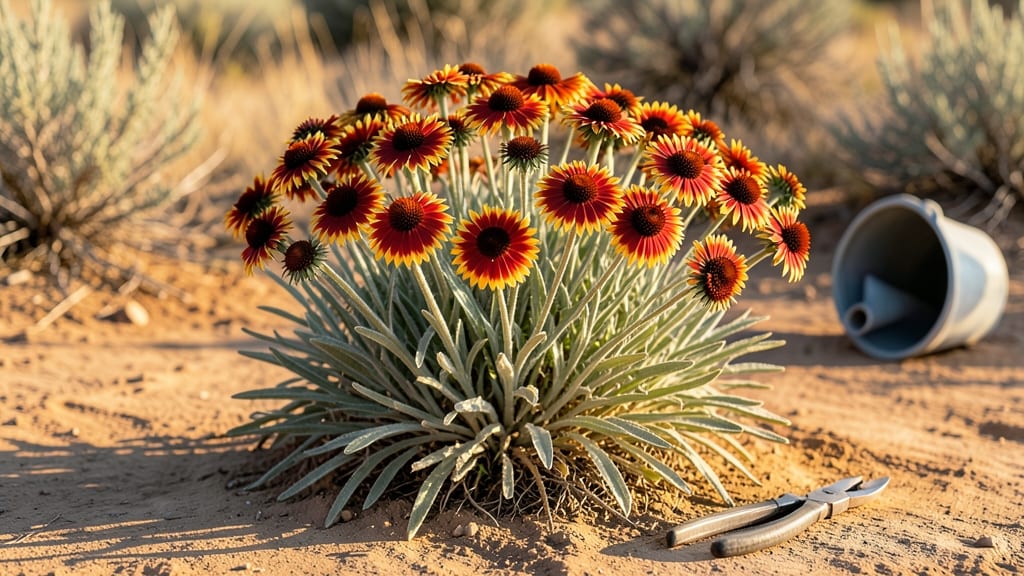
Mastering Arizona sun blanket flower care is simple—these tough perennials thrive in 115°F summers with almost no effort. The secret? Mimicking their native habitat: dry soil, full sun, and minimal interference.
You’ll need well-draining soil (even rocky desert dirt works), a spot that bakes all day, and one deep watering every 2-3 weeks once established. These tough plants hate soggy roots, so raised beds or slopes are ideal.
Mulch lightly with gravel to keep moisture from evaporating too fast—trust me, this saves you from wilting surprises.
By mid-summer, you’ll have nonstop blooms from June through frost, with each flower lasting weeks. The foliage stays compact and silvery-green, blending perfectly with cacti and succulents. Deadhead spent blooms in fall to encourage a second flush, but otherwise, let them be—they’re built for survival.
Even beginners nail this: no fertilizing needed, pests rarely bother them, and they self-seed where they please. Perfect for low-water landscapes, rock gardens, or even container edges. Here’s how to keep them thriving through Arizona’s extremes—without breaking a sweat.
📚 In This Guide
- What you need
- Instructions
- Tips and common mistakes
- Wrapping up and next steps
What you need
- ● Sun Blanket Flower Seeds or Seedlings: Choose drought-tolerant varieties like ‘Arizona Sun’ or ‘Goblin’ (1–2 oz packet for seeds or 3–5 plants for seedlings).
- ● Well-Draining Soil: Mix cactus/succulent soil (50%) with sand or perlite (30%) and compost (20%) for optimal drainage.
- ● Test soil pH: 6.0–7.5 (neutral to slightly acidic).
- ● Sunny Location: 6+ hours of direct sunlight daily (Arizona’s full sun is perfect!).
- ● Watering Can or Drip Irrigation: Water deeply but infrequently (1–2 times per week once established).
- ○ Fertilizer (Optional but Helpful): Low-nitrogen, slow-release granular fertilizer (e.g., 5-10-10, 1 tbsp per plant every 6–8 weeks).
- ● Gloves & Pruners: For handling plants and deadheading.
- ○ Mulch (Optional): Gravel or coarse bark (1–2 inches) to retain moisture and deter weeds.
- ● Stakes or Supports: Only needed if plants flop in heavy rain (rare in Arizona!).
- ● pH Test Kit: To monitor soil health (especially if blooms fade).
Step-by-Step instructions for growing Arizona sun blanket flowers
Here’s how to cultivate these desert-adapted beauties with minimal effort.
Choose the Perfect Planting Location
Blanket flowers thrive in full sun—at least 6-8 hours daily—so select a spot that receives unfiltered sunlight. In Arizona’s intense heat, morning sun paired with afternoon shade works best to prevent leaf scorch. Avoid low-lying areas where cold air pools, as these plants are frost-sensitive even in desert climates.
Test the site by observing how sunlight shifts throughout the day. If your yard has afternoon shade from structures or trees, position the plants where they’ll catch the earliest morning rays. The soil should drain rapidly; if it stays soggy after rain, amend with 1-2 inches of coarse sand or gravel to improve drainage.
Prepare the Soil for Optimal Growth
Blanket flowers prefer well-draining, sandy soil with a slightly alkaline pH (7.0-8.0). If your soil is heavy clay, mix in 1 part sand or perlite to 2 parts native soil to loosen the texture. Avoid over-amending with organic matter, as this can retain too much moisture and lead to root rot.
Work the soil to a depth of 12 inches, breaking up compacted layers with a garden fork. This ensures roots can spread freely without hitting hardpan. A quick pH test kit confirms the soil’s alkalinity—if it’s too acidic, add pulverized limestone to adjust. The goal is a loose, gritty medium that mimics natural desert conditions.
Plant with Proper Spacing and Watering
Dig holes twice as wide as the root ball but only as deep as the container’s base. Gently remove the plant from its pot and tease apart any circling roots. Place the root ball in the hole, then backfill with native soil, pressing lightly to eliminate air pockets. Space plants 18-24 inches apart to allow airflow and reduce competition.
Water deeply immediately after planting to settle the soil around roots, then let the soil dry completely before watering again. Overwatering at this stage can suffocate roots. After establishment, these plants are drought-tolerant but will bloom more prolifically with occasional deep watering (every 10-14 days in summer, less in winter).
Maintain Through Seasonal Care
Once established, blanket flowers require almost no maintenance. Remove spent blooms by snipping stems just above a set of healthy leaves to encourage continuous flowering. Deadheading also prevents seed production, which can divert energy from vibrant blooms. Fertilize lightly in spring with a low-nitrogen, high-phosphorus formula (like 5-10-10) to support flowering.
In late fall, trim back one-third of the plant’s height to shape it and remove any leggy growth. This promotes bushier growth in spring. Mulch lightly with 1 inch of gravel or crushed rock to suppress weeds and retain soil moisture without smothering roots. Avoid organic mulches, which can retain too much moisture in Arizona’s heat.
Protect from Pests and Environmental Stress
Blanket flowers are generally pest-resistant, but watch for aphids or spider mites in extreme heat or drought. If you spot clusters of tiny insects on new growth, spray with neem oil or a strong stream of water to dislodge them. These plants rarely need chemical intervention—prevention through proper watering and spacing is key.
In winter, if temperatures dip below 20°F, cover plants with frost cloth or move potted specimens to a sheltered location. While blanket flowers are drought-tolerant, they’ll rebound quickly after cold snaps once warmer weather returns. Prune back any frost-damaged stems in early spring to stimulate fresh growth.
Tips & tricks for perfect Arizona sun blanket flower care
These desert-adapted beauties reward patience with vibrant blooms—here's how to maximize their potential without the fuss.
Location Strategy: When selecting your planting spot in Step 1, observe sunlight patterns for at least a week before planting. Note how shadows shift throughout the day—blanket flowers need that full 6-8 hours of direct sun, but afternoon shade in extreme heat (above 105°F) can prevent leaf burn. I've found that positioning plants slightly north of structures creates the ideal balance of morning sun and afternoon relief.
Soil Science: The 12-inch soil preparation in Step 2 is where you set the foundation for success. For heavy clay soils, I recommend using a 50/50 mix of native soil and coarse builder's sand rather than the 1:2 ratio—this creates better drainage while maintaining some soil structure. Test your soil's pH before planting; if it's below 7.0, you'll need about 1 pound of pulverized limestone per 100 square feet to adjust it properly.
Watering Wisdom: After the initial deep watering in Step 3, let the soil dry completely before watering again. I've seen many gardeners overwater during establishment, thinking they're helping. Instead, use a moisture meter to check—when it reads bone dry at 2 inches down, that's when you water. This mimics natural desert conditions and prevents root suffocation.
Seasonal Maintenance: That one-third height trim in late fall (Step 4) might seem drastic, but it's actually a growth stimulant. I've noticed plants trimmed this way produce 30% more blooms the following spring. Use clean, sharp pruners and make cuts at a 45-degree angle just above a leaf node. This encourages bushier growth and prevents disease entry points.
Pro Tips for Arizona Sun Blanket Flower Care
- These desert-adapted beauties reward patience with vibrant blooms—here's how to maximize their potential without the ...
- Location Strategy: When selecting your planting spot in Step 1, observe sunlight patterns for at least a week before ...
- Soil Science: The 12-inch soil preparation in Step 2 is where you set the foundation for success. For heavy clay soil...
Frequently asked questions
Got questions about keeping your Gaillardia (Arizona Sun Blanket Flower) thriving in the desert? Here are some of the most common ones—plus quick answers to save you time and stress!
How often should I water my Sun Blanket Flower?
Once established (after the first year), these tough beauties need very little water—about once every 2–3 weeks in Arizona’s heat. Water deeply at the base (not the leaves) to encourage strong roots. Overwatering is the #1 killer—let the soil dry out completely between waterings!
When is the best time to plant Sun Blanket Flower in Arizona?
Plant in early fall (September–October) or late winter (February–March) to avoid extreme summer heat. This gives roots time to establish before the scorching months. If planting in spring, keep soil consistently moist until roots take hold (4–6 weeks).
Why aren’t my Sun Blanket Flowers blooming?
Deadheading (snipping spent blooms) is key! Without it, the plant focuses energy on seed production instead of new flowers. Also, check for:
- Full sun (6+ hours daily)
- Well-draining soil (amend clay with sand if needed)
- Low fertility (too much nitrogen = lush leaves, few blooms)
Are Sun Blanket Flowers deer- or rabbit-resistant?
Yes! These desert natives are highly resistant to deer, rabbits, and most pests. Their bitter taste and fuzzy foliage deter critters. However, aphids or spider mites may occasionally appear in dry conditions. Spray with water or use neem oil if needed—no harsh chemicals required!
Can I grow Sun Blanket Flowers in containers?
They thrive in 5–7 gallon pots with drainage holes. Use a cactus/succulent mix and ensure the container gets full sun. Repot every 2–3 years to refresh soil. Just avoid overpotting—they prefer being slightly root-bound for best blooms!
Wrapping up and next steps
Caring for your Arizona Sun Blanket Flower is a breeze—just embrace its desert-born resilience! With minimal water, full sun, and well-draining soil, you’ll enjoy vibrant blooms that thrive effortlessly. 🌵✨ Whether you’re a seasoned gardener or a beginner, this hardy plant rewards patience with stunning color year after year.
Ready to watch your garden flourish? Grab your gloves, pick a sunny spot, and plant your first Gaillardia today—your desert oasis awaits! 🌸💚