
Container Gardens
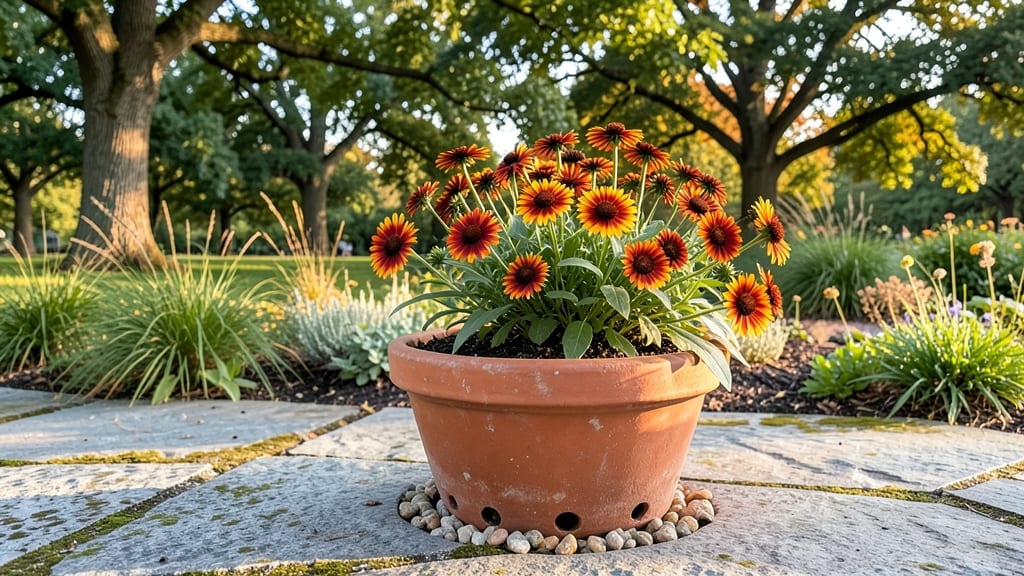
Growing blanket flowers in pots unlocks a burst of fiery color that never fades—just ask my neighbors who’ve been snapping photos of my patio display every summer. 🌻 These sun-loving perennials aren’t just pretty; they’re tough enough to handle container life while rewarding you with nonstop blooms from June until frost.
The secret? A few simple adjustments to soil, water, and container size that most gardeners overlook.
You’ll need 5-gallon pots or larger with drainage holes, a well-draining potting mix, and at least 6 hours of direct sun daily—no fancy equipment required.
I’ve grown them in everything from terracotta to fabric grow bags, and they thrive as long as you mimic their prairie roots: loose soil, minimal fuss, and regular deadheading to keep the flowers coming. Even my black thumb can’t kill these.
What you’ll end up with is a sunny, low-maintenance centerpiece that hums with pollinators and stays vibrant all season. The daisy-like blooms in red, yellow, and orange create a bold contrast against any patio backdrop, and they even rebloom if you trim them back after the first flush.
Perfect for small spaces, balconies, or anyone tired of annuals that fizzle out by August.
Here’s where it gets interesting—these plants handle heat, drought, and even light freezes once established, making them the ultimate carefree perennial.
Whether you’re a beginner or a seasoned container gardener, the key is starting with the right setup—and I’ve got you covered with the exact steps that work every time.
📚 In This Guide
- What you need
- Instructions
- Tips and common mistakes
- Wrapping up and next steps
What you need
- ● Blanket flower plants (Gaillardia spp.) – Choose 2-3 healthy nursery-grown plants (dwarf varieties like 'Arizona Sun' or 'Mesa Red' work well in pots).
- ● Containers – 1-2 large pots (12-18 inches in diameter) with drainage holes. Terra cotta or fabric pots are ideal!
- ● Well-draining potting mix – 1 bag (5-10 quarts) of a high-quality, lightweight mix (add perlite or sand for extra drainage).
- ○ Gravel or pebbles – 1 small bag (optional but helpful) for the bottom layer of pots to improve drainage.
- ● Slow-release fertilizer – 1 packet (10-20 lb) (look for a balanced 10-10-10 or 20-20-20 formula).
- ● Watering can or hose with a gentle nozzle – For even hydration without over-saturating.
- ● Companion plants – Pair with lavender, yarrow, or ornamental grasses for a pollinator-friendly pot.
- ● Decorative mulch – Pea gravel or bark chips to retain moisture and add aesthetics.
- ● Plant stakes or supports – If your blanket flowers grow tall (e.g., 'Goblin' variety), add 1-2 stakes per plant for stability.
- ● Liquid fertilizer – 1 bottle (for mid-season feeding) (dilute to half-strength for containers).
Step-by-Step guide to growing vibrant blanket flowers in containers
Here's how to cultivate these bold, drought-tolerant perennials in pots for years of color.
🪴 Step 1: Choose the Right Containers and Drainage
Blanket flowers (Gaillardia) need well-draining pots to prevent root rot. Select containers with multiple drainage holes—at least two per 12-inch pot—and use unglazed terra cotta if possible, as it wicks away excess moisture. For 4 plants, you'll need four 12-inch pots (or two 16-inch pots for two plants each) to allow proper root spread.
If your pots lack drainage, drill ¼-inch holes in the bottom using a masonry bit. Line the bottom with ½-inch gravel to create an air pocket that prevents soil compaction. I always test drainage by filling the pot with water—it should empty completely within 5 minutes. Slow drainage means your blanket flowers will sit in soggy soil, leading to yellowing leaves and stunted growth.
🌱 Step 2: Prepare Soil and Plant with Proper Spacing
Fill each pot with a lightweight, fast-draining mix—combine 50% premium potting soil, 30% perlite, and 20% coarse sand for ideal aeration. Avoid garden soil; it compacts in containers and suffocates roots. Moisten the mix until it holds together when squeezed but doesn’t drip—think of it as a damp sponge, not a wet rag.
Dig a hole twice as wide as the root ball but only as deep as the container’s original soil line. Gently remove the plant from its nursery pot, loosen the roots if they’re circling, and place it in the hole. Space 4 plants in 12-inch pots with 6 inches between centers to allow airflow and prevent crowding. Press soil firmly around the roots but avoid compacting it—you want roots to spread easily, not fight for space.
☀️ Step 3: Position for Full Sun and Water Deeply
Blanket flowers demand 6+ hours of direct sunlight daily—they’ll fade and flop without it. Place pots on a south- or west-facing patio, balcony, or deck. If shade is unavoidable, supplement with a grow light positioned 12 inches above the plants for 12 hours daily. You’ll notice leaves turning pale green or stems stretching toward light if they’re not getting enough sun.
Water deeply once a week (or when the top 2 inches of soil feel dry). Soak the soil until water runs freely from the drainage holes—this encourages deep root growth. After watering, let excess drain completely to prevent soggy roots. Mulch with 1 inch of gravel or pebbles on top of the soil to reduce evaporation and keep roots cool in summer heat.
✂️ Step 4: Prune and Fertilize for Continuous Blooms
Deadhead spent blooms every 2 weeks by snipping stems ¼ inch above the next set of leaves. This redirects energy to new flowers instead of seed production. Use clean, sharp pruners to avoid tearing stems—rough cuts invite disease. I prune in the early morning when stems are firm, and the plant has had a full night’s water uptake.
Feed plants once in spring with a balanced, slow-release fertilizer (10-10-10) mixed into the soil. Avoid high-nitrogen fertilizers—they promote leafy growth at the expense of blooms. In late summer, switch to a low-nitrogen, high-phosphorus fertilizer (5-10-10) to encourage fall reblooming. You’ll see a surge of new buds within 2-3 weeks after fertilizing.
⏰ Step 5: Overwinter and Divide Every 2-3 Years
In USDA Zones 8-10, blanket flowers are perennial and can stay in pots year-round. Move them to a sheltered, partially shaded spot in winter and reduce watering to once every 3 weeks. In colder zones (below Zone 7), dig up pots and store them in a garage or basement with 40-50°F temperatures and minimal light. Check soil moisture monthly—it should stay slightly dry but not bone-dry.
Divide clumps every 2-3 years in early spring to rejuvenate growth. Remove the plant, separate the root ball into 3-4 sections, and repot each in fresh soil. This prevents overcrowding and keeps blooms vibrant. You’ll know it’s time to divide when the center of the plant stops flowering and leaves yellow—this is the plant’s way of telling you it’s outgrown its space.
Tips & tricks for thriving container-grown blanket flowers
Let me share the hard-won wisdom that keeps my Gaillardia blooming like crazy in pots year after year.
Drainage Test: That 5-minute drainage test in Step 1 isn't just arbitrary—it's the single most important factor for root health. I've seen blanket flowers develop root rot within days when pots drain slowly. If your water doesn't drain completely within 5 minutes, add more gravel to the bottom or choose containers with larger drainage holes. The roots need oxygen as much as water, and slow drainage suffocates them.
Soil Mix Secret: The 50-30-20 soil ratio in Step 2 works because it mimics the natural well-draining conditions blanket flowers love. I've found that adding 1 cup of horticultural charcoal to each pot (optional) helps prevent soil compaction and keeps the mix fresh longer. This is especially helpful if you're in a humid climate where soil can become waterlogged between waterings.
Light Positioning: When positioning your pots for that crucial 6+ hours of sun in Step 3, pay attention to the time of day. Morning sun is gentler, while afternoon sun can be more intense. If your balcony gets harsh afternoon sun, consider moving pots slightly to the east side during peak summer months. I've noticed my plants develop slight leaf scorch when exposed to full afternoon sun without gradual acclimation.
Winter Care: For those in Zones 8-10, don't be tempted to keep watering normally through winter. The reduced light levels mean your plants aren't actively growing, so they need far less moisture. I've seen blanket flowers develop fungal issues from overwatering during their winter dormancy. Remember, the goal is to keep soil slightly dry—not bone-dry—during these months.
Pro Tips for Blanket Flower In Pots
- Let me share the hard-won wisdom that keeps my Gaillardia blooming like crazy in pots year after year.
- Drainage Test: That 5-minute drainage test in Step 1 isn't just arbitrary—it's the single most important factor for root health.
- Soil Mix Secret: The 50-30-20 soil ratio in Step 2 works because it mimics the natural well-draining conditions blanket flowers love.
Frequently asked questions
Got questions about growing blanket flowers in pots? You’re not alone! Here are some of the most common concerns—and their easy solutions.
How often should I water blanket flowers in containers?
Water your potted blanket flowers deeply when the top 1–2 inches of soil feel dry (usually every 2–3 days in hot weather). Containers dry out faster than garden beds, so check soil moisture daily during heatwaves. Pro tip: Use well-draining pots with drainage holes to prevent root rot!
When is the best time to plant blanket flowers in pots?
Plant them in early spring (after the last frost) or late summer (6–8 weeks before your first fall frost). Blanket flowers thrive in warm soil, so avoid planting when nighttime temps drop below 50°F (10°C). Bonus: Starting seeds indoors 4–6 weeks before transplanting gives them a head start!
Can blanket flowers survive winter in pots?
Most blanket flower varieties (like Gaillardia) are hardy perennials but struggle in freezing pot soil. Move containers to a sheltered spot (like a garage or under eaves) or wrap pots in burlap for insulation. In zones 5–8, mulch heavily and protect from wind. Alternative: Treat as annuals and replant yearly for vibrant blooms!
What’s the easiest way to revive a leggy or sparse blanket flower?
Leggy or sparse growth often means too much shade or overcrowding. Prune back 1/3 of the plant in early spring to encourage bushier growth, and move pots to full sun (6+ hours/day). If roots are bound, repot in fresh soil with a slow-release fertilizer. Deadheading spent blooms also boosts new flowers!
Are there drought-tolerant blanket flower varieties for pots?
Try ‘Arizona Sun’ or ‘Mesa Yellow’—both are heat- and drought-resistant once established. These varieties need less frequent watering (every 5–7 days in dry spells) and still pack vibrant colors. Pair them with sedum or lavender for a low-maintenance container garden!
How do I keep pests away from potted blanket flowers?
Blanket flowers rarely face pests, but aphids or spider mites may appear in dry conditions. Spray plants with a hose to dislodge pests, or use neem oil as a natural remedy. Preventively: Ensure good airflow by spacing pots apart and avoid overwatering. Healthy plants = fewer pests!
Wrapping up and next steps
Growing blanket flowers in pots is a rewarding way to add vibrant, sun-loving color to your space—whether it’s a balcony, patio, or windowsill! 🌸 With the right soil, sunlight, and care, these perennials will bloom year after year, turning your containers into cheerful focal points.
Whether you’re a seasoned gardener or just starting out, this guide gives you all the tools to succeed.
Now that you’re ready to plant, take the next step—pick your favorite pot, grab those seeds or cuttings, and get growing! Share your progress with fellow plant lovers, and don’t forget to tag us in your blooming masterpieces. Happy gardening! 🌱✨