Flowers
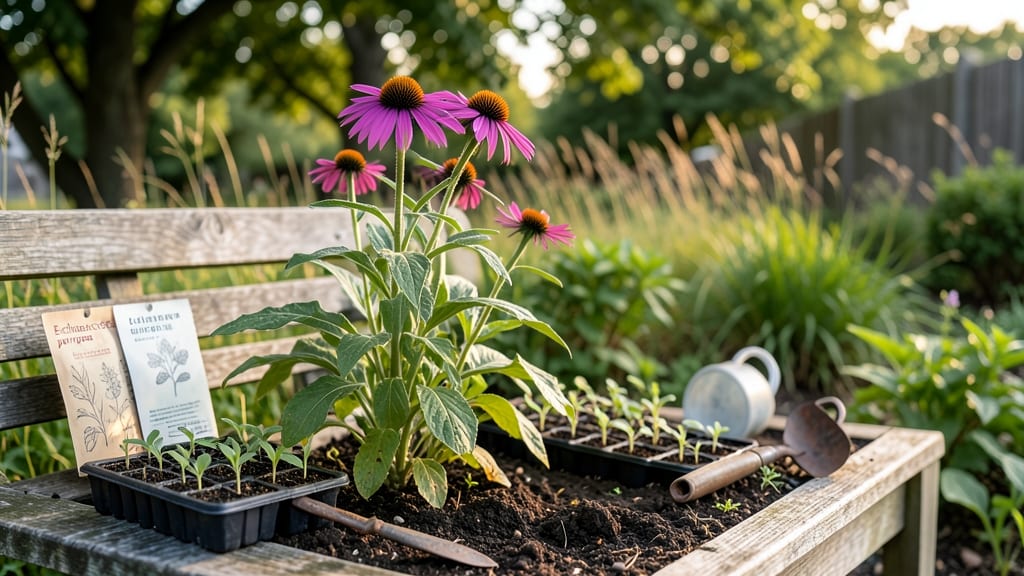
Growing echinacea from flower seeds means purple-pink blooms that last from summer into frost—with almost no fuss once established. 🌸 I’ve grown these tough perennials from seed for years, and the secret isn’t in fancy techniques but in matching their simple needs: well-draining soil, full sun, and patience.
Most gardeners buy transplants, but starting from seed gives you more varieties and saves money.
The process is straightforward once you know the basics: sow seeds indoors 8-10 weeks before your last frost, or directly outside in spring when soil warms to 50°F.
Thin seedlings to 12 inches apart, and within a year, you’ll have sturdy plants that reward you with 3-4 inches of daisy-like blooms all season. No deadheading needed—they keep flowering until frost.
What you’ll end up with is a low-maintenance perennial that thrives in poor soil, resists deer, and attracts pollinators like crazy. The first year is all about root growth, but by year two, you’ll have foot-tall plants covered in blooms. Even in drought, they keep going—just water occasionally once established.
Works in zones 3-9, from city gardens to rural fields. Here’s how to get started without overcomplicating it—no green thumb required.
📚 In This Guide
- What you need
- Instructions
- Tips and common mistakes
- Wrapping up and next steps
What you need
- ● Echinacea seeds: Choose Echinacea purpurea (purple coneflower) or Echinacea pallida (pale purple coneflower) for best results. Buy 10–20 seeds for a small garden patch or 50+ for a fuller display.
- ● Seed-starting mix: A lightweight, well-draining mix (e.g., Black Gold Seedling Mix)—about 2–3 cups per seed tray.
- ● Seed trays or pots: Biodegradable peat pots (3–4 inches deep) or small plastic trays with drainage holes.
- ● Grow lights or sunny windowsill: A full-spectrum LED grow light (12–16 hours/day) or a south-facing window with bright light.
- ● Spray bottle: For gentle watering (avoid soaking seeds!).
- ● Plastic wrap or humidity dome: To retain moisture while seeds germinate.
- ● Trowel or small shovel: For transplanting seedlings outdoors.
- ○ Garden soil (optional): Well-draining, slightly sandy soil (amend with compost if needed).
- ○ Fertilizer (optional): A balanced, low-nitrogen fertilizer (e.g., 5-5-5) for established plants.
- ○ Mulch (optional): Straw or shredded leaves to retain moisture and suppress weeds.
- ● Patience! Echinacea seeds can take 10–21 days to germinate.
- ● A warm spot (65–75°F) for germination (use a heat mat if needed).
- ● Outdoor planting zone: USDA Zones 3–9 (hardy once established!).
How to grow echinacea from seeds for long-lasting color
Here's the straightforward approach I've used to grow hardy echinacea plants that bloom reliably year after year.
🌱 Step 1: Start Seeds Indoors at the Right Time
Plant echinacea seeds indoors 8-10 weeks before your last frost date. They germinate best at 65-70°F, so use a seedling heat mat if your home runs cooler. I like to start them in 2-inch deep biodegradable pots filled with a sterile seed-starting mix—this prevents damping-off and makes transplanting easier later.
Press the seeds lightly into the soil about ¼ inch deep—they need darkness to germinate, so don't cover them with extra soil. Mist the surface with water until it's evenly moist but not soggy. Place the pots in a warm, dark location until you see first green shoots, which usually appears in 10-21 days.
Once sprouts emerge, move them to a sunny window or under grow lights for 14-16 hours daily. Echinacea seedlings are slow to establish, so don't rush—wait until they develop 2-3 sets of true leaves before transplanting outdoors. This ensures they're strong enough to handle cooler spring temperatures.
☀️ Step 2: Harden Off and Transplant Outdoors
Begin hardening off seedlings 2 weeks before your last frost date. Place them outside in a sheltered spot for 1-2 hours the first day, gradually increasing exposure over 7-10 days. Watch for wilting or yellowing leaves—this signals they're not ready for full outdoor conditions yet.
Transplant seedlings into the garden after all frost risk has passed. Choose a location with full sun (at least 6-8 hours daily) and well-draining soil. Echinacea hates soggy roots, so amend heavy soil with compost to improve drainage. Space plants 12-18 inches apart—they'll grow 2-4 feet tall and need room to establish.
Water deeply after transplanting to help roots settle. Mulch around the base with 2-3 inches of organic mulch to retain moisture and suppress weeds. Avoid overhead watering once plants are established—water at the base instead to prevent fungal diseases.
🌿 Step 3: Maintain for Consistent Blooms
Echinacea thrives with minimal care once established. Water 1-2 times per week during dry spells, but let the soil dry slightly between waterings—overwatering is the fastest way to kill these tough perennials. You'll know it's time to water when the top 1-2 inches of soil feel dry to the touch.
Fertilize lightly in early spring with a balanced, slow-release fertilizer (10-10-10). Too much nitrogen promotes leafy growth at the expense of flowers. Deadhead spent blooms in late summer to encourage a second flush of flowers. I skip this step in fall—letting seed heads dry on the plant adds winter interest and attracts pollinators.
Divide mature plants every 3-4 years in early spring or fall. Dig up clumps, separate the roots, and replant sections in fresh soil. This rejuvenates growth and prevents overcrowding. Echinacea is drought-tolerant once established, but dividing ensures healthy, vibrant blooms for years to come.
Tips & tricks for perfect echinacea growth
Here's what I've learned to help you skip the common pitfalls and grow stunning echinacea plants that thrive year after year.
Timing Secret: The 8-10 week indoor starting window is critical—this gives seedlings enough time to develop strong roots before facing outdoor conditions. Mark your last frost date on the calendar and count backward. I always set a reminder for this exact time to avoid rushing. Confession: I skipped this once and ended up with weak seedlings that struggled in the garden.
Germination Strategy: Echinacea seeds need darkness to sprout, so resist the urge to cover them with extra soil. Simply pressing them lightly into the sterile seed-starting mix creates the perfect environment. I've found that maintaining consistent moisture (not soggy) during the 10-21 day germination period makes all the difference—this is where most people see failures.
Lighting Upgrade: While natural sunlight works, grow lights provide more consistent results for the required 14-16 hours daily. Position lights 2-3 inches above seedlings and adjust as they grow. I use LED grow lights because they're energy-efficient and don't generate excess heat that could stress young plants. Watch for leggy seedlings as a sign they need more light.
Transplanting Wisdom: When transplanting outdoors, focus on soil preparation first. Amending heavy soil with compost creates that crucial well-draining environment echinacea craves. I've seen plants struggle in compacted soil even when everything else was perfect. Space those 12-18 inches apart—crowding leads to competition and weaker blooms.
Pro Tips for Echinacea Flower Seeds
- Here's what I've learned to help you skip the common pitfalls and grow stunning echinacea plants that thrive year after year.
- Timing Secret: The 8-10 week indoor starting window is critical—this gives seedlings enough time to develop strong roots before facing outdoor conditions.
- Germination Strategy: Echinacea seeds need darkness to sprout, so resist the urge to cover them with extra soil.
Frequently asked questions
Got questions about growing echinacea flower seeds? You’re not alone! Here are answers to the most common queries to help you cultivate vibrant blooms with confidence.
When is the best time to plant echinacea seeds?
Plant echinacea seeds in early spring (after the last frost) or late summer (6–8 weeks before the first frost). Seedlings need time to establish roots before winter. If starting indoors, sow seeds 8–10 weeks before transplanting outdoors. Pro tip: Use a seedling heat mat to speed up germination in cooler climates!
How often should I water echinacea plants?
Water deeply but infrequently—about 1–1.5 inches per week, including rainfall. Let the soil dry slightly between waterings to prevent root rot. Once established (after 6–12 months), echinacea is drought-tolerant. Warning: Overwatering is the #1 killer of young seedlings!
Can echinacea grow in containers or do they need a garden bed?
Yes! Echinacea thrives in containers as long as the pot is at least 12–18 inches deep with drainage holes. Use well-draining potting mix and place in full sun (6+ hours daily). Dwarf varieties like ‘White Swan’ are ideal for pots. Bonus: Containers make it easy to move plants for seasonal sunlight adjustments!
Why aren’t my echinacea seeds germinating?
Common culprits: cold soil (echinacea needs warmth to sprout), poor seed-to-soil contact, or old seeds (viability drops after 1–2 years). Try stratifying seeds (chill in a damp paper towel for 2–4 weeks) or using a seedling heat mat. If seeds are fresh but still struggling, test soil moisture—keep it consistently damp (not soggy).
Are there alternatives to echinacea for pollinators?
If echinacea isn’t your style, try these pollinator-friendly seeds:
- Coneflower (Echinacea purpurea’s cousin) – Similar care, longer blooms.
- Black-eyed Susan (Rudbeckia) – Drought-tolerant and cheerful.
- Bee balm (Monarda) – Loves moisture and attracts hummingbirds.
- Milkweed (Asclepias) – Essential for monarch butterflies.
Wrapping up and next steps
Growing echinacea flower seeds is a rewarding way to bring vibrant, long-lasting blooms to your garden with surprisingly little effort! 🌸 Whether you’re a seasoned gardener or just starting out, these hardy perennials thrive in diverse conditions and offer year-round beauty.
Now that you’re armed with the right materials and answers to common questions, it’s time to roll up your sleeves and plant those seeds—your garden will thank you!
Ready to take the next step? Start small:
- Pick a sunny spot in your yard or a container.
- Grab your echinacea seeds and follow the planting guide.
- Watch your garden transform into a pollinator paradise!