
Flowers
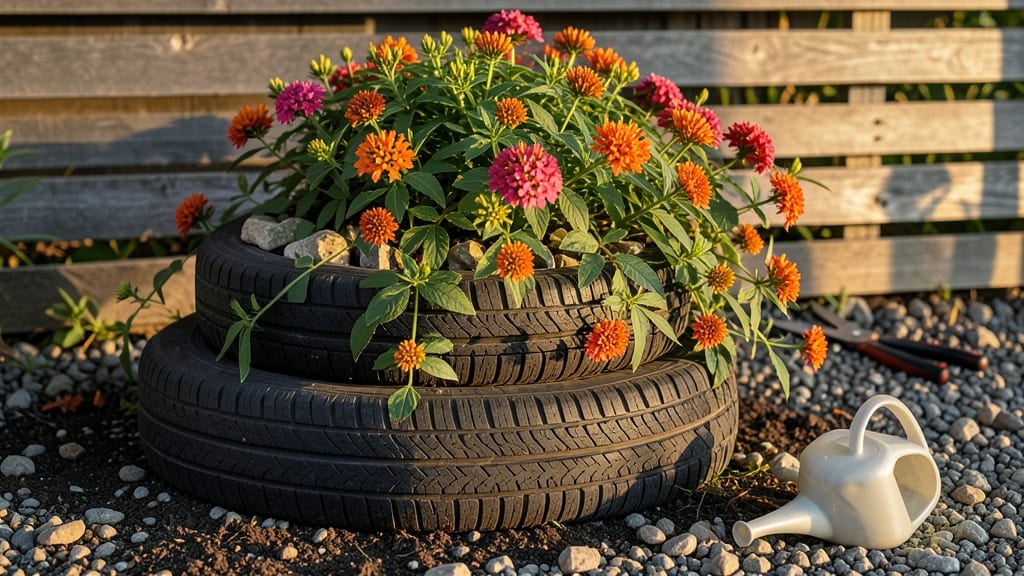
Stacked tires create stunning raised flower beds that save space, water, and even your back—while giving old rubber a second life. 🌿 I stumbled onto this idea after watching my neighbor transform a cramped patio into a vertical garden using nothing but repurposed truck tires.
The results? A vibrant, drought-tolerant display that thrives where traditional beds would fail.
Here’s the magic: tires hold moisture better than open soil, their stacked design maximizes small spaces, and you can move them to follow the sun. Just avoid treated tires (opt for clean, black rubber) and line the bottom with landscape fabric to prevent soil loss.
My first bed—filled with sun-loving succulents and petunias—stayed lush through a 90-degree summer with only weekly watering.
You’ll end up with a low-maintenance, high-impact garden feature that turns heads at neighborhood gatherings. The layered look adds texture, and you can paint tires for a pop of color or leave them natural for a rustic charm. Plus, kids love helping arrange the "tire towers"—it’s gardening with built-in fun.
Works for balconies, sidewalks, or even urban courtyards. Whether you’re reviving a tired corner or maximizing a tiny yard, these beds prove sustainability doesn’t mean sacrificing style. Let’s get planting!
📚 In This Guide
- What you need
- Instructions
- Tips and common mistakes
- Wrapping up and next steps
What you need
- ● Used tires: 3–5 (depending on desired size; 15–20 inches in diameter works well for small flower beds). Pro tip: Check local recycling centers or auto shops for free or low-cost options!
- ● Drill: With a 1-inch hole saw or jigsaw attachment (for drainage holes).
- ● Screwdriver or hammer: For securing the drill bit or jigsaw.
- ● Gravel or small rocks: 1–2 gallons (for drainage at the bottom of each tire).
- ● Potting soil: 2–3 bags (depending on tire size and plant types; opt for well-draining mix if possible).
- ● Watering can or hose: With a gentle spray nozzle for even moisture.
- ○ Paint (optional but fun!):strong> Acrylic or outdoor latex paint + brush/roller (for custom designs).
- ● Gloves and safety goggles: Always prioritize safety when drilling!
- ● Moss or landscape fabric: To line the tires and prevent soil erosion.
- ● Cactus/succulent soil: If planting drought-resistant varieties.
- ● Decorative mulch: For a polished look (e.g., colored pebbles or bark chips).
- ● Stacking hardware: S-hooks or heavy-duty zip ties to secure stacked tires.
- ● Solar-powered lights: For a magical nighttime glow!
Step-by-Step guide to creating beautiful flower beds with upcycled tires
Tires transform into stylish, water-efficient planters with minimal effort and maximum impact.
🪴 Step 1: Prepare and Stack Your Tires
Start by cleaning your tires thoroughly with warm, soapy water to remove dirt, grease, and debris. I like to use a stiff brush for stubborn grime—this ensures your plants won’t grow in contaminated soil later. Let them dry completely in the sun before stacking.
Stack tires vertically, nesting each one inside the previous like a tire tower. Use a rubber mallet to gently tap the bottom tire into place if needed—this creates a stable base. For a 4-tire planter, the topmost tire should sit at least 6 inches above ground level to prevent water pooling and root rot.
Here's the thing—don’t skip the drainage holes. Use a power drill with a ½-inch bit to create 4-6 holes in the bottom of each tire. Space them evenly around the circumference so excess water can escape freely. I always mark the holes with a pencil first to keep them symmetrical.
🌱 Step 2: Layer for Drainage and Soil Retention
Before adding soil, line the bottom of the lowest tire with 2-3 inches of coarse gravel or broken pottery shards. This creates a drainage layer that prevents waterlogging—critical for tire planters, which can trap moisture. I use leftover construction gravel from a recent patio project, but clean river rocks work just as well.
Next, fill each tire ⅔ full with a lightweight potting mix blended with 20% perlite or vermiculite. This mix stays loose, allowing roots to breathe while retaining enough moisture. Avoid garden soil—it compacts in tires and suffocates plants. Tap the sides gently after each layer to settle the mix without compacting it.
For a 4-tire planter, you’ll need about 3 cubic feet of mix total. I mix 2 bags of premium potting soil with 1 gallon of perlite for the perfect balance. The perlite also helps prevent the soil from becoming too dense as it settles over time.
☀️ Step 3: Choose and Plant Your Flowers
Select plants that thrive in well-draining conditions and match your tire planter’s sun exposure. Succulents, ornamental grasses, and drought-tolerant annuals like lantana or salvia excel here. For a 4-tire planter, I typically plant 1-2 perennials (like sedum) in the bottom tier and 3-4 annuals in the upper tiers.
Dig a hole in the soil twice as wide as the plant’s root ball but only as deep as the container’s height allows. Gently remove the plant from its nursery pot and tease the roots if they’re circling. Place it in the hole, then backfill with soil, pressing lightly to eliminate air pockets. Water deeply right after planting to help roots settle.
Space plants according to their mature size—6-12 inches apart for compact annuals, 12-18 inches for perennials. Overcrowding leads to competition for water and nutrients, which tire planters can’t handle well. If you’re unsure, check the plant tag for spacing guidelines.
💧 Step 4: Water and Mulch for Long-Term Success
Water the newly planted tires deeply but slowly to avoid washing soil out through the drainage holes. Use a watering can with a rose attachment or a gentle hose stream directed at the soil surface. Let the water soak in completely—you’ll know it’s done when water emerges from the bottom holes.
After watering, apply a 1-inch layer of mulch (like shredded bark or straw) to the soil surface. Mulch conserves moisture, regulates soil temperature, and suppresses weeds—all critical in tire planters where soil dries out faster. Keep the mulch 2 inches away from plant stems to prevent rot.
Here’s where it gets fun—watch how the tires regulate moisture. Because they’re elevated, they dry out slower than ground-level beds but still need watering every 2-3 days in hot weather. Stick your finger 1 inch into the soil before watering; if it feels dry, it’s time.
Tips & tricks for perfect upcycled tire planters
Transforming old tires into flourishing planters is one of those creative projects that feels like magic—until you hit a snag. Here's how to make it look effortless every time.
Drainage Design Matters: Those 4-6 drainage holes in Step 1 aren't just suggestions—they're non-negotiable for tire planters. I've seen people skip this step, only to watch their plants drown in standing water. Use a pencil to mark your hole locations first, then drill with a ½-inch bit (any larger and soil will escape, any smaller and drainage suffers). For extra stability, add a few holes around the sides too—this prevents the tires from cracking under root pressure as plants grow.
Soil Science for Container Gardening: The ⅔-full soil ratio in Step 2 might seem arbitrary, but it's actually a sweet spot for tire planters. Fill them completely and the sides will compact, suffocating roots. Leave too much empty space and plants won't anchor properly. For the 3 cubic feet of mix needed, I recommend adding 1 cup of compost to each tire after planting—this gives your plants a nutrient boost without compacting the soil. The perlite/vermiculite blend is crucial here; without it, the soil will settle too much and create air pockets that roots can't penetrate.
Plant Placement Strategy: When arranging your 1-2 perennials and 3-4 annuals in Step 3, think vertically. Place taller plants like ornamental grasses in the back (bottom tire) and shorter annuals like lantana in front (top tires). This creates a natural waterfall effect while ensuring all plants get adequate sunlight. Pro tip: Tease the roots of container-grown plants before planting—this encourages them to spread into the tire's soil instead of circling where they were pot-bound. The 6-12 inch spacing guideline might seem tight, but tire planters dry out faster than ground beds, so plants compete for moisture more aggressively.
Watering Wisdom: The "water until it emerges from bottom holes" method in Step 4 is brilliant, but timing matters. Water in the morning so plants have all day to absorb moisture before evening heat evaporates it. For the 2-3 day watering schedule, adjust based on your climate—desert areas may need daily watering, while humid regions might stretch to 4-5 days. I've found that adding 1 tablespoon of liquid seaweed fertilizer to each watering (optional) helps plants establish stronger root systems in the confined tire space.
Pro Tips for Flower Beds With Tires
- Transforming old tires into flourishing planters is one of those creative projects that feels like magic—until you hit a snag.
- Drainage Design Matters: Those 4-6 drainage holes in Step 1 aren't just suggestions—they're non-negotiable for tire planters.
- Soil Science for Container Gardening: The ⅔-full soil ratio in Step 2 might seem arbitrary, but it's actually a sweet spot for tire planters.
Frequently asked questions
Got questions about creating flower beds with tires?
You’re not alone! Here are some of the most common concerns—and their easy solutions—to help you get started with confidence.
How long do tire planters last before they degrade?
With proper care, tire planters can last 3–5 years or longer, depending on weather exposure and material quality. Blackwall tires (smooth-sided) resist cracking better than treaded ones. To extend their life, paint them with weather-resistant spray and avoid placing them in direct sunlight for prolonged periods.
Do tire planters really save water compared to regular flower beds?
Tires hold moisture efficiently, reducing evaporation by up to 30% compared to open soil. Their curved shape also directs rainwater toward the roots. For extra savings, mulch the top with straw or wood chips and water deeply 2–3 times per week (adjust for climate). Drought-resistant plants like succulents or lavender thrive here with minimal watering!
Can I use any type of tire for planters, or are some better?
Not all tires are created equal! Opt for clean, treadless tires (like those from trucks or SUVs) for durability. Avoid tires with metal rims or sharp edges—they can damage roots and make planting tricky. If you’re repurposing old car tires, remove any rusted bolts or debris first. Pro tip: Smaller tires (15–17 inches) are easier to move and ideal for herbs or small flowers.
What if my tires leak or develop holes after planting?
Leaks are common but fixable! Patch small holes with waterproof silicone sealant or a rubber patch kit. For larger tears, line the inside with a heavy-duty plastic liner before adding soil. If drainage is poor, drill a few 1-inch holes at the bottom (cover with landscape fabric to prevent soil loss). Prevention tip: Avoid placing tires on uneven ground where stress can cause cracks.
Are there alternatives to tires for upcycled planters?
Yes! If tires aren’t your style, try these eco-friendly options:
- Plastic containers: Clean bins, buckets, or even cut-in-half milk jugs (great for herbs).
- Wooden pallets: Split them into vertical planters for a rustic look.
- Cement blocks: Stack and fill with soil for a modern, sturdy bed.
- Old bathtubs or sinks: Perfect for larger plants like ferns or hostas.
Wrapping up and next steps
Transforming old tires into vibrant flower beds isn’t just creative—it’s eco-friendly, budget-friendly, and space-saving! 🌱 Whether you’re a gardening newbie or a seasoned pro, these upcycled planters prove that sustainability and beauty go hand in hand.
With a little effort, you’ll create a stunning, low-maintenance garden that thrives and helps the planet.
Ready to take the next step? Start small—repurpose just one tire this weekend and watch your garden (and confidence!) grow. Need inspiration? Browse local nurseries for drought-resistant plants or share your progress online to join a community of tire-turned-gardeners. Your green thumb is closer than you think! 🌸