Flowers
Growing fragrant jasmine flowers means waking up to a garden that smells like a tropical paradise—no matter the season. I’ve spent years perfecting my approach, and the secret isn’t complicated: it’s about mimicking the warm, humid conditions where jasmine thrives naturally.
The key varieties, like Jasminum officinale and Jasminum sambac, reward patience with intoxicating blooms that perfume the air at dusk.
You’ll need a sunny spot with well-draining soil and a trellis or fence for climbing varieties to show off their best. Most gardeners overwater, which is the fastest way to kill these delicate vines—jasmine prefers to dry out slightly between waterings.
A light, balanced fertilizer in spring keeps the fragrance strong, and pruning after blooming encourages bushier growth next year.
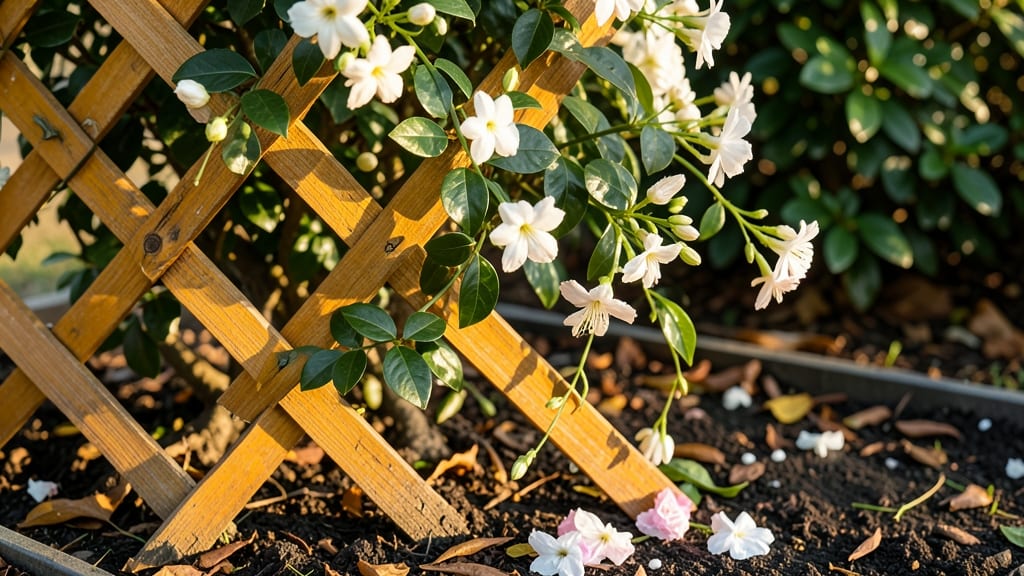
By summer’s end, your jasmine will be covered in star-shaped white flowers, their scent stronger than any store-bought candle. The real magic happens when you train it to climb a porch or arbor, turning your entryway into a fragrant welcome.
Even in winter, with proper care, some varieties keep blooming or hold buds ready for spring.
Whether you’re growing in pots for a balcony or planting directly in the ground, jasmine adapts beautifully. The only rule? Don’t rush it—these plants grow slowly but reward you with decades of fragrance if you give them the right conditions. Ready to transform your garden into a sensory escape?
📚 In This Guide
- What you need
- Instructions
- Tips and common mistakes
- Wrapping up and next steps
What you need
- ● Jasmine plants: Choose between Jasminum officinale (common jasmine) or Jasminum sambac (Arabian jasmine). Start with 1-2 healthy plants or 3-5 cuttings for propagation.
- ● Well-draining potting mix: A blend of peat moss, perlite, and compost (1:1:1 ratio) for containers, or loamy garden soil with organic matter for in-ground planting.
- ● Containers (if growing indoors/outdoors): Pots with drainage holes, 10-12 inches in diameter for mature plants. Terracotta or fabric pots work best.
- ● Slow-release fertilizer: A balanced 10-10-10 or 20-20-20 formula (1 tbsp per plant, applied every 2-3 months).
- ● Pruning shears: Sharp, sterilized shears for trimming and shaping (or a clean knife in a pinch!).
- ○ Support structure (optional but helpful): A trellis, arbor, or small fence for climbing varieties.
- ● Watering can or hose with a gentle spray nozzle: Jasmine prefers consistent moisture but hates soggy roots.
- ○ Mulch (optional): Shredded bark or straw to retain soil moisture and regulate temperature.
- ● Sunlight access: At least 6-8 hours of direct sunlight daily (south-facing windows or partial shade for indoor setups).
- ● Patience (and love!): Jasmine can take 6-12 months to bloom fully, but the wait is worth it!
- ● 🌡️ Temperature: Jasmine thrives in 60-80°F (15-27°C)—avoid frost or extreme heat.
- ● ✨ Scent boost: Pinch off spent blooms to encourage more fragrant flowers.
- ● 🔥 Humidity hack: Mist leaves occasionally (especially indoors) to mimic tropical conditions.
Step-by-step instructions for cultivating fragrant jasmine vines
Here’s how to coax those intoxicating blooms from your jasmine—no green thumb required.
Choose the Right Variety and Location
Jasmine thrives in USDA Zones 7-10, but most fragrant varieties (like Jasminum officinale or Jasminum sambac) can adapt indoors with the right care. Select a sun-drenched spot—at least 6 hours of direct sunlight daily—or supplement with a grow light for indoor plants. If growing outdoors, plant in spring after the last frost when soil reaches 60°F. Here’s the thing—jasmine hates soggy roots, so ensure well-draining soil and a location with partial afternoon shade in hot climates to prevent leaf scorch.
For container growing, use a 5-gallon pot with drainage holes—jasmine’s roots spread aggressively, and cramped roots mean fewer blooms. If planting in the ground, amend heavy soil with 2-3 inches of compost to improve aeration. I’ve seen jasmine choke out nearby plants if given too much space, so prune back any aggressive suckers in early summer to keep it manageable.
Plant and Establish for Strong Growth
Dig a hole twice as wide as the root ball but no deeper—jasmine roots prefer to spread horizontally. Place the plant so the top of the root ball sits just below soil level (jasmine hates being buried too deep). Backfill with native soil mixed with 1 part perlite to prevent compaction. Water deeply right after planting to settle the soil, but don’t drown it—jasmine’s roots need oxygen, not a swamp.
For the first 4-6 weeks, keep the soil evenly moist (about 1 inch of water per week). You’ll know it’s right when the topsoil feels damp but not waterlogged. Avoid overhead watering—jasmine’s glossy leaves trap moisture, inviting fungal diseases like powdery mildew. Mulch with 2 inches of organic mulch (like shredded bark) to retain moisture and regulate soil temperature. This step is the moment that matters: a strong root system now means nonstop blooms later.
Prune and Train for Abundant Blooms
Prune jasmine twice a year—once in late winter/early spring (just as new growth begins) and again right after flowering to shape the vine. Cut back one-third of the oldest stems to encourage new growth, and trim any leggy or bare branches. I always use clean, sharp pruners to avoid tearing the bark—jasmine heals slowly, and jagged cuts invite pests.
Train the vine along a trellis, arbor, or fence to maximize air circulation and sunlight exposure. Jasmine blooms best when it has support to climb—think of it like a lazy cat stretching toward a sunbeam. If growing indoors, rotate the pot quarter-turn weekly so the vine grows evenly toward the light. Real talk: jasmine left to sprawl on the ground produces fewer flowers because it puts energy into leaf growth instead of blooms.
Feed and Maintain for Year-Round Fragrance
Feed jasmine monthly during the growing season (spring through fall) with a balanced, water-soluble fertilizer (like 10-10-10). Dilute it to half-strength—jasmine is sensitive to salt buildup, and over-fertilizing leads to lush foliage but no flowers. Stop fertilizing in late summer to let the plant focus on setting buds for next year’s blooms.
Watch for yellowing leaves—this usually means overwatering or nutrient deficiency. If a leaf yellows, don’t panic: it’s often just the plant adjusting. But if it happens across multiple leaves, flush the soil with plain water to leach out excess salts. Deadhead spent blooms regularly to encourage more flowers, and watch how the vine responds—jasmine rewards consistent care with months of intoxicating scent.
Overwinter for Next Year’s Blooms
If growing outdoors in Zones 6 or colder, protect jasmine from frost by mulching heavily (up to 4 inches) around the base. For container plants, move them to an unheated garage or shed where temperatures stay above 40°F. Water sparingly in winter—jasmine goes semi-dormant and needs barely moist soil. I’ve seen jasmine survive winters with no care at all, but a little protection ensures healthier growth come spring.
In Zones 7-10, jasmine stays evergreen with minimal care. Just reduce watering and fertilizing in winter months (December-February) and prune lightly to remove any dead or damaged growth. The key is not to disturb it—jasmine hates being moved once established, so choose its permanent spot wisely. With this approach, you’ll have year-round fragrance with almost no effort.
Tips & tricks for perfect fragrant jasmine cultivation
Here’s what nobody tells you about keeping your jasmine blooming like a pro—without the guesswork.
Location is Everything: That 6 hours of direct sunlight requirement is non-negotiable for fragrant varieties. If your space gets less, supplement with a full-spectrum grow light placed 6-12 inches above the plant for 12-14 hours daily. I learned this the hard way after my jasmine produced leaves but no blooms—turns out, it wasn’t getting enough light despite my sunny windowsill. For outdoor plants in hot climates, provide partial afternoon shade to prevent leaf scorch, especially during peak summer months when temperatures exceed 85°F.
Root Health Determines Everything: The 5-gallon pot recommendation isn’t just about size—it’s about drainage. If you notice water pooling at the bottom after watering, your container lacks proper drainage holes. For in-ground planting, the 2-3 inches of compost amendment isn’t optional—it prevents soil compaction that strangles roots. I’ve seen jasmine plants wither despite regular watering because their roots couldn’t breathe. Test your soil’s drainage by digging a small hole and filling it with water—if it doesn’t drain within 30 minutes, amend with perlite or sand.
Pruning Precision Pays Off: When you prune those one-third of the oldest stems in late winter, focus on stems that are thicker than a pencil. These are the energy vampires that drain the plant. For indoor jasmine, the quarter-turn weekly rotation isn’t just about aesthetics—it prevents the vine from growing lopsided toward the light source. I once had a jasmine that grew entirely toward one window, leaving the other side bare and leggy. After implementing the rotation, it grew evenly and produced twice as many blooms within a month.
Fertilizer Timing is Critical: The monthly feeding during growing season should stop precisely in late summer—not when you feel like it. This pause allows the plant to redirect energy from leaf production to flower bud formation. I used to fertilize through fall, thinking more food meant more growth, but my jasmine would produce lush leaves with almost no blooms. The key is understanding that jasmine’s natural cycle needs this break. For container plants, flush the soil every 3-4 months with plain water to prevent salt buildup from fertilizer residues.
Pro Tips for Fragrant Jasmine Flower
- Here’s what nobody tells you about keeping your jasmine blooming like a pro—without the guesswork.
- Location is Everything: That 6 hours of direct sunlight requirement is non-negotiable for fragrant varieties.
- Root Health Determines Everything: The 5-gallon pot recommendation isn’t just about size—it’s about drainage.
Frequently asked questions
Got questions about growing fragrant jasmine?
You’re not alone! Here are answers to the most common queries—from planting to troubleshooting—so you can enjoy those sweet blooms all year.
When is the best time to plant jasmine?
Plant jasmine in early spring (after the last frost) for best results. If you’re in a mild climate (zones 8-11), you can plant in fall too. For container growing, plant anytime the soil isn’t frozen. Just avoid extreme heat or cold—jasmine hates stress!
How long does it take for jasmine to bloom?
With patience, jasmine can bloom within 1-2 years if grown from cuttings or young plants. Established plants may take 3-5 years for full fragrance. Pro tip: Prune lightly after flowering to encourage more blooms next season!
Can jasmine grow in containers? What size pot do I need?
Jasmine thrives in containers—just choose a pot at least 12-15 inches deep with drainage holes. Dwarf varieties (like Jasminum officinale ‘Revolutum’) work best. Use well-draining soil and repot every 2-3 years to refresh nutrients.
Why isn’t my jasmine flowering? Troubleshooting tips.
No blooms? Check these fixes:
- Not enough sunlight: Jasmine needs 6+ hours of sun daily (more = better blooms).
- Over-fertilizing: Too much nitrogen = leafy growth, fewer flowers. Use a balanced 10-10-10 fertilizer lightly in spring.
- Pruning too late: Trim after flowering (late summer/fall) to shape and encourage new growth.
- Young plant: Patience! Some varieties take years to mature.
Does jasmine survive winter? How to protect it?
Hardy jasmine (like Jasminum nudiflorum) tolerates down to 0°F, but tropical varieties (e.g., Jasminum sambac) need help. For containers, move them indoors or wrap pots in bubble wrap. Mulch garden plants heavily and cover with burlap if temps drop below 20°F.
Wrapping up and next steps
Growing fragrant jasmine flowers is a rewarding experience that brings beauty, serenity, and a heavenly scent to your space—all with surprisingly little effort!
Whether you’re a beginner or a seasoned gardener, these versatile vines thrive in containers, trellises, or even as ground covers. Embrace the journey, and soon you’ll be surrounded by lush, blooming vines that fill the air with their intoxicating aroma.
Ready to transform your garden or patio? Start small—plant a single cutting or a potted jasmine today! With the right care, you’ll enjoy year-round blooms and a fragrant retreat in no time. 🌸✨