Neem Oil
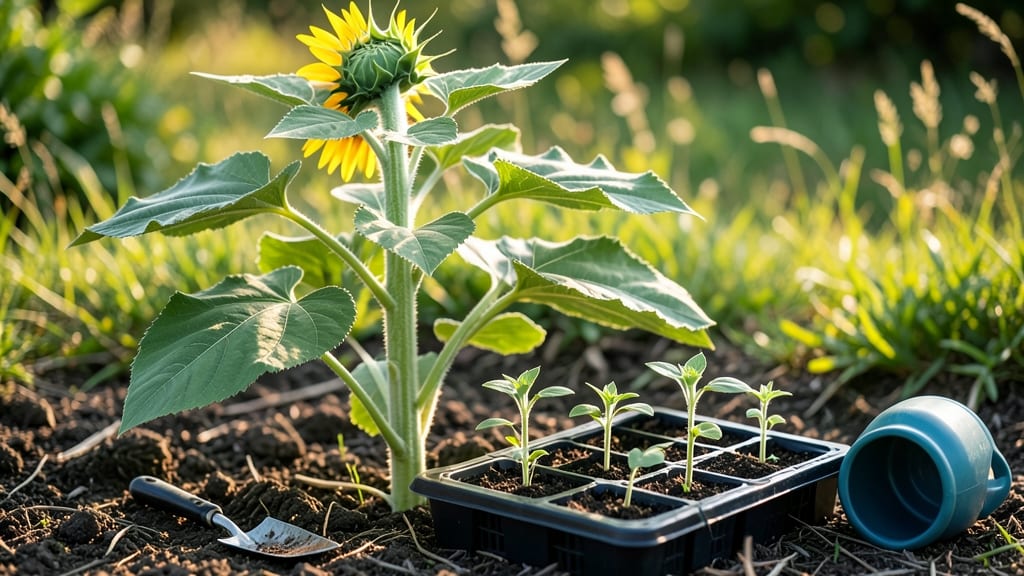
Growing giant sunflower sprouts from seed is where the real magic happens—those first green shoots breaking through the soil feel like a promise of summer. 🌱 I’ve watched them go from tiny specks to towering giants in just two months, and the secret isn’t complicated: it’s about the right seeds, the perfect soil, and a little patience.
Most people rush the early stages, but giant sunflowers demand respect from day one—they won’t forgive neglect.
The key starts with heirloom giant seeds like ‘Russian Giant’ or ‘Mammoth’—these aren’t your average sunflowers. You’ll need a deep container (at least 12 inches) or well-loosened soil, since their roots dive deep early.
Plant them ½-inch deep, just like the packet says, but keep the soil warm (70°F+) for faster germination—cold soil is the #1 reason sprouts stall for weeks. A heat mat or sunny windowsill works wonders if your spring is still chilly.
Within 7-10 days, you’ll see those first leaves unfurl—thick, velvety, and bright green, not the pale yellow of stressed seedlings. That’s when the real work begins: morning watering only (giants hate soggy roots), full sun (6+ hours daily), and no crowding (space them 6 inches apart).
Skip the fertilizers for the first month; these sprouts need to focus on roots, not leaves. By day 30, you’ll notice the stalks stiffening—this is when they start their vertical takeover of your garden.
Here’s where most gardeners trip up: weak stems or slow growth usually mean one of three things—too much water, not enough sun, or seeds that were old. Test your soil’s drainage first (giants hate wet feet), and if your yard gets afternoon shade, move the container instead of fighting nature.
The payoff? By day 60, you’ll be staring at 10-foot giants with blooms big enough to cast shadows. And yes, they will steal the show at your neighborhood.
📚 In This Guide
- What you need
- Instructions
- Tips and common mistakes
- Wrapping up and next steps
What you need
- ● Sunflower Seeds: 1–2 lbs of heirloom or giant sunflower seeds (e.g., 'Russian Mammoth' or 'Autumn Beauty'). Opt for untreated, organic seeds for best results.
- ● Growing Medium: 2–3 trays or containers (10"x20" or larger) with drainage holes.
- ● 1–2 cups of high-quality potting mix (seed-starting mix or coco coir blend) per tray.
- ● Watering Supplies: Spray bottle (for consistent moisture).
- ● Watering can with a fine rose nozzle.
- ○ Grow Lights (Optional but Recommended): 1–2 full-spectrum LED grow lights (12–16 inches above sprouts) for indoor setups.
- ○ Thermometer & Hygrometer: Basic seedling heat mat (optional, for faster germination in cool climates).
- ● Fertilizer: 1 tsp of fish emulsion or seaweed extract (diluted) for nutrient boosts.
- ● Support Structures: Small stakes or bamboo canes (for taller varieties).
- ● Neem Oil Spray: 1–2 tbsp neem oil + 1 tsp mild soap (for pest prevention).
- ● Garden Journal: Notebook or app to track growth stages and conditions.
Step-by-Step instructions for growing towering sunflowers
Here's how to coax those 10-foot giants from tiny seeds—no shortcuts, just smart techniques.
🌱 Step 1: Choose the Right Variety and Prepare the Soil
Select a giant sunflower variety like 'Russian Giant' or 'Mammoth'—these reach 12-15 feet with proper care. Start with well-draining, nutrient-rich soil mixed with compost (I use 3 gallons per planting hole). Sunflowers hate soggy roots, so amend heavy clay with sand or perlite if needed.
Test your soil's pH—sunflowers thrive in 6.0-7.0. If your soil is too acidic, add lime to raise the pH before planting. I dig a hole twice as wide as the root ball and loosen the soil 12 inches deep to encourage deep root growth. The deeper the roots, the taller the stem.
☀️ Step 2: Plant Deeply and Stake for Stability
Sunflower seeds need warm soil (60°F+) to germinate. Plant 1-2 inches deep—deeper than most guides suggest—for stronger stems. I bury the seeds 1.5 inches down and space them 18-24 inches apart in rows 3 feet apart to prevent overcrowding.
Drive a 5-foot stake into the soil beside each seed, securing it with soft twine (not wire—it cuts into stems). This isn’t just for support; it trains the plant to grow upright from the start. Water deeply after planting (about 1 gallon per hole) to settle the soil around the seeds.
💧 Step 3: Water Deeply and Monitor Growth
Sunflowers need 1-2 inches of water per week, but deep soakings (every 5-7 days) beat frequent shallow watering. I use a soaker hose to avoid wetting leaves, which prevents fungal diseases like powdery mildew. Stop watering 2 weeks before harvest to let the stems dry slightly—this improves flavor and storage life.
Watch for first true leaves (the second set after the initial cotyledons). Once they appear, fertilize lightly with a balanced 10-10-10 mix (½ cup per plant). Too much nitrogen early on makes plants leafy but stunts flower growth. I switch to a low-nitrogen, high-phosphorus fertilizer (like 5-10-10) when buds form to boost flowering.
✂️ Step 4: Prune and Support as They Grow
Remove suckers (side shoots) that form at the base—these drain energy from the main stem. Pinch off any buds on the lower 3 feet of the stalk to direct growth upward. I also tie the main stem to the stake every 2-3 feet as it grows to prevent snapping in wind or rain.
Here’s the thing—giant sunflowers need space. If plants lean, don’t prop them up with branches. Instead, reposition the stake or gently bend the stem (not break it) to encourage straighter growth. Stop pruning 4-6 weeks before harvest so the plant focuses on seed development.
🌿 Step 5: Harvest at Peak Maturity
Sunflowers are ready when the back of the flower head turns yellow and the outer petals droop. Cut the stem 2-3 inches above the base with clean shears—this prevents disease from spreading into the stem. Hang them upside down in a dry, dark place (like a garage) for 2-3 weeks to dry completely.
To store, remove the seeds and roast them at 300°F for 30 minutes for a snack. Or, save the heads for winter bouquets—they last months when dried properly. The key is patience: Rushing harvest means smaller, less flavorful seeds.
Tips & tricks for growing towering sunflowers
Here's what nobody tells you about coaxing those massive sunflowers to their full potential—lessons from years of trial and error.
Soil Depth Matters: When loosening soil to 12 inches deep in Step 1, don't just scratch the surface. Use a broad fork to create vertical channels that encourage roots to grow downward. I've seen stems reach 10 feet when roots penetrate 3 feet deep—surface scratching gives you only 6-footers. The deeper the roots, the more stable the stem and the taller the plant. Think of it like building a skyscraper foundation.
Staking Strategy: The 5-foot stakes in Step 2 aren't just for show—they're growth training tools. Bury the stake halfway (2.5 feet) to create a natural bend that strengthens the stem. This prevents the classic "whiplash" growth where plants grow too fast and snap. I also recommend using bamboo stakes—they're flexible enough to adjust as the plant grows, unlike rigid metal stakes that can pierce stems.
Watering Wisdom: Those 5-7 day deep waterings in Step 3 need precision. Water when the top 2 inches of soil feel dry to the touch. Too frequent watering creates weak stems, while inconsistent watering stresses the plant. I've found that morning watering (before 10 AM) gives plants the moisture they need to photosynthesize all day. For the 2 weeks before harvest, reduce to every 10-12 days—this toughens the stems for better seed development.
Harvest Timing: The 2-3 week drying period in Step 5 is non-negotiable for seed quality. I've learned that if you harvest too early (when petals are still upright), seeds won't develop fully. Wait until the back turns completely yellow and petals droop naturally—this ensures maximum oil content in the seeds. For winter bouquets, harvest when the back turns brown but before petals fall completely. The drying time at 300°F for 30 minutes is perfect for roasting, but if you want to save seeds for planting next year, reduce to 275°F for 20 minutes to preserve viability.
Pro Tips for Giant Sunflower Sprouts
- Here's what nobody tells you about coaxing those massive sunflowers to their full potential—lessons from years of trial and error.
- Soil Depth Matters: When loosening soil to 12 inches deep in Step 1, don't just scratch the surface.
- Staking Strategy: The 5-foot stakes in Step 2 aren't just for show—they're growth training tools.
Frequently asked questions
Got questions about growing giant sunflower sprouts? You’re not alone! Here are answers to the most common queries—from timing to troubleshooting—so you can grow confidently and harvest those towering greens in just 60 days.
How long do giant sunflower sprouts take to grow?
With the right conditions, you can harvest edible sprouts in 5–7 days and full-sized leaves (up to 12 inches!) in 60 days. For microgreens, snip after the first true leaves appear. For mature greens, wait until the stems are thick and leaves are vibrant—patience pays off!
Do I need special lighting for sunflower sprouts?
Nope! Sunflower sprouts thrive in bright, indirect light (like a sunny windowsill) or under grow lights (12–16 hours/day). Avoid direct midday sun, which can scorch tender sprouts. A south-facing window or a basic LED grow light works perfectly for beginners.
Why are my sunflower sprouts turning yellow or moldy?
Yellowing? Likely overwatering or poor drainage. Mold (fuzzy spots)? Your sprouts are too damp—reduce misting and ensure good airflow. Always use clean, room-temperature water and rinse sprouts twice daily to prevent bacteria. Drainage trays are your friend!
Can I grow giant sunflower sprouts in soil?
While sunflower seeds can grow in soil, sprouts thrive in a soil-free medium (like a sprouting jar or tray with a damp paper towel). Soil risks mold and pests. For mature plants, transplant seedlings into pots with well-draining soil—but if you want fast, nutrient-packed sprouts, stick to the no-soil method.
Are giant sunflower sprouts safe to eat raw?
They’re crunchy, peppery, and packed with nutrients like vitamin C, magnesium, and antioxidants. Rinse thoroughly before eating to remove any residue. Use them in salads, sandwiches, or blend into smoothies. Pro tip: Harvest leaves when young for the mildest flavor!
Wrapping up and next steps
Growing giant sunflower sprouts is a rewarding journey that yields nutrient-packed greens in just 60 days—no sprawling garden required! With the right tools, patience, and a dash of creativity, you can enjoy a bountiful, sunlit harvest that’s perfect for salads, garnishes, or even juicing. 🌻✨
Ready to take the next step? Start small—try a batch of sprouts this week, then scale up as you gain confidence. Share your towering progress with fellow gardeners, and who knows? You might inspire others to grow their own sunflower skyscrapers!