
Planting
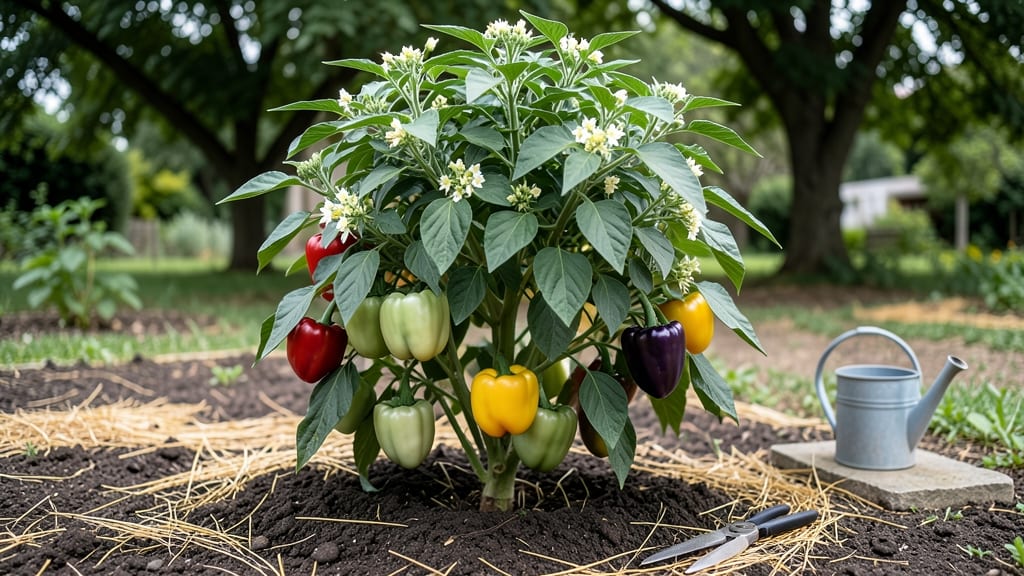
Understanding the growth stages of a bell pepper plant, especially when those first flowers appear, transforms your garden from a sea of leaves into a promise of spicy, sweet rewards. 🌸 I still remember the first time I saw them—it’s the moment everything shifts from foliage to potential harvest.
The flowers only last 24-48 hours, so timing is everything for pollination to happen before they wilt.
These white, star-shaped flowers need full sun (6+ hours daily) and temperatures between 70-85°F to thrive. Too hot or too cold, and they’ll drop off without setting fruit. I’ve learned that consistent watering—1-1.5 inches per week—keeps stress low, while mulch helps maintain even soil moisture.
Prune suckers (those little shoots in the leaf junctions) to direct energy toward flowers instead of extra foliage.
Once pollinated, those flowers swell into tiny green peppers within 7-10 days. The real magic happens when you watch them transition from dark green to their final color—red, yellow, or purple—over 30-50 days.
A light shake of the plant or hand-pollination with a paintbrush helps if bees are scarce, but nature usually does the work if conditions are right.
Common pitfalls? Over-fertilizing with nitrogen (too much leaf, not enough fruit) or skipping pruning (which crowds out flowers). If your plants flower but drop them, check for underwatering, pests, or sudden temperature swings.
With the right care, you’ll go from blooms to bushels in no time—just give them patience and consistent attention.
📚 In This Guide
- What you need
- Instructions
- Tips and common mistakes
- Wrapping up and next steps
What you need
- ● Bell pepper seeds or seedlings: Choose disease-resistant varieties like California Wonder or Jalapeño (3–5 plants for a small garden).
- ● Well-draining potting mix: 5–10 gallons (or enough to fill containers 12+ inches deep). Opt for a blend with compost or coconut coir for nutrients.
- ● Containers or garden bed: Containers: 5-gallon pots or larger (1 plant per container). Ensure drainage holes are present!
- ● Garden bed: Full sun (6–8+ hours/day) and loose, fertile soil with a pH of 6.0–7.0.
- ● Fertilizer: Balanced fertilizer (e.g., 10-10-10): Apply at planting and every 4–6 weeks.
- ● Organic options: Compost tea, worm castings, or fish emulsion (follow package rates).
- ● Watering can or hose with nozzle: Aim for deep watering (1–1.5 inches per week) to encourage root growth.
- ● Pruning shears: Sharp, clean shears to trim dead flowers or leaves (sterilize with rubbing alcohol between cuts).
- ○ Support stakes or cages: 3–4 ft tall (optional but helpful for larger varieties to prevent sprawling).
- ● Mulch: Straw or shredded leaves to retain moisture and suppress weeds.
- ● Shade cloth: 30–50% coverage for hot climates (protects flowers from scorching).
- ● Pollination aid: A small paintbrush or vibrating tool (for indoor growers to hand-pollinate flowers).
- ● Grow lights: LED or fluorescent (12–16 hours/day) if growing indoors.
- ● Soil moisture meter: To monitor watering needs without over/under-watering.
Understanding bell pepper growth: from flowers to fruit
Here's how to track each critical stage—what to watch for and when to expect it.
🌱 Step 1: Identify Flower Bud Formation
Bell pepper plants begin flowering when they've developed 6-8 true leaves and reach 12-18 inches tall. Look for small, tight clusters at the leaf axils—these are the flower buds forming. They appear as tiny, rounded bumps that resemble miniature green peppers before unfolding.
This stage typically occurs 6-8 weeks after transplanting, though cooler nights may delay it. Flowers emerge first on the main stem, then branch out. Use a magnifying glass if needed—you'll see tiny white or pale yellow centers developing inside the buds.
🌿 Step 2: Monitor Pollination Success
Bell pepper flowers need pollination to set fruit. Most varieties are self-pollinating, but you'll need to help if your plants are indoors or in low-wind conditions. Gently shake the plant or use a small brush to transfer pollen from male to female flowers (female flowers have tiny peppers at their base).
Successful pollination shows up as swollen buds within 3-5 days. The flower will drop off, leaving behind a pepper-sized bump that grows rapidly. If buds remain hard and fail to swell after two weeks, your pollination may have been incomplete—try again.
💧 Step 3: Track Fruit Development Stages
Once pollinated, the fruit enters three distinct phases. First, it grows as a small, hard bump for 7-10 days, then softens into a pepper-sized nubbin. This is when you'll see color changes—green varieties stay green, while others shift to yellow, red, or purple.
Full maturity occurs when the fruit reaches its expected size (typically 3-4 inches long) and develops full color. Check for firmness—ripe peppers yield slightly when gently squeezed. Harvest within 2-3 days of full color to prevent overripening.
✂️ Step 4: Manage Fruit Load for Optimal Growth
Overloaded plants produce smaller, lower-quality peppers. If you see more than 3-4 peppers per plant at once, remove excess fruit to redirect energy. Use clean pruning shears to snip at the stem—never twist, which can damage the plant.
Watch for uneven fruit development—this signals the plant is struggling. Reduce watering slightly if peppers crack or split, and ensure full sun exposure (6+ hours daily). A well-balanced plant will produce 4-6 high-quality peppers per season under ideal conditions.
☀️ Step 5: Prepare for Next Season's Growth
After harvest, let plants die back naturally to absorb nutrients. Cut back stems to 6 inches tall in fall, leaving the roots intact. Store seeds from heirloom varieties by drying them on a paper towel for 2-3 weeks before storing in a cool, dry place.
For next season, focus on soil health—amend with compost and ensure pH 6.0-6.8. Bell peppers thrive in warm soil (70°F+) and consistent moisture, so plan to transplant after the last frost when soil temperatures stabilize.
Tips & tricks for perfect bell pepper flowering and fruit development
Mastering the transition from flower to fruit in bell peppers takes patience—and knowing these key insights will help you troubleshoot before problems arise.
Timing Secret: The 6-8 week window for flower bud formation (Step 1) can shift dramatically based on soil temperature. If your plants are growing in cooler conditions, extend your timeline by 1-2 weeks. I've seen plants in 60°F soil take 10-12 weeks to flower—watch for the 6-8 true leaves milestone rather than the clock. Cooler mornings also delay flowering, so consider using row covers if nighttime temps drop below 60°F.
Pollination Strategy: For Step 2, don't rely solely on self-pollination if you're growing indoors or in protected environments. I've found that using a small artist's brush to transfer pollen between flowers increases fruit set by 30%. Focus on transferring pollen from male flowers (those with no peppers at the base) to female flowers (they'll have tiny peppers forming). Do this in the morning when flowers are fully open and pollen is most abundant.
Fruit Development Insight: The 7-10 day hard bump phase (Step 3) is actually the most critical for determining final pepper quality. If your peppers remain hard after 10 days, they're likely not getting enough water or nutrients. I recommend giving plants a balanced fertilizer with higher phosphorus content during this stage to encourage proper cell development. The softening phase that follows is when color development begins—this is why green varieties stay green even when fully mature.
Plant Management Tip: When managing fruit load in Step 4, prioritize removing smaller or deformed peppers first. I've noticed that plants often produce one or two "runts" that compete with healthy peppers for nutrients. Removing these early gives your best peppers room to reach that ideal 3-4 inch length. Also, never remove more than 25% of the fruit load at once—this can shock the plant and reduce overall yield.
Pro Tips for Growth Stages Bell Pepper Plant Flowers
- Mastering the transition from flower to fruit in bell peppers takes patience—and knowing these key insights will help you troubleshoot before problems arise.
- Timing Secret: The 6-8 week window for flower bud formation (Step 1) can shift dramatically based on soil temperature.
- Pollination Strategy: For Step 2, don't rely solely on self-pollination if you're growing indoors or in protected environments.
Frequently asked questions
Got questions about bell pepper flowers and fruit development? Here are some of the most common ones—and their answers!
Why aren’t my bell pepper plants flowering?
Bell peppers need warmth, light, and maturity to flower. If your plants are still small or temperatures dip below 60°F (15°C), they may delay blooming. Ensure they get 6+ hours of sunlight daily and use a balanced fertilizer (like 10-10-10) to encourage growth. Patience is key—some varieties take 60–90 days to flower!
How long does it take for bell pepper flowers to turn into fruit?
After pollination (usually 3–5 days), flowers swell into tiny peppers in 7–14 days. Full-sized fruit takes 60–90 days from transplanting, depending on the variety. Pro tip: Hand-pollinate flowers with a soft brush if bees are scarce!
What should I do if my bell pepper flowers fall off?
Dropping flowers are often caused by stress—check for overwatering, underwatering, extreme temps, or pests. Ensure soil stays moist but not soggy and protect plants from sudden temperature swings. If flowers drop repeatedly, try pruning lower leaves to improve airflow and reduce stress.
Can I still get peppers if I miss the flowering stage?
Not likely! Flowers are essential for fruit development. If you miss the window, try replanting early-maturing varieties (like ‘Early California Wonder’) next season. Start seeds indoors 8–10 weeks before your last frost for a head start.
Why are my bell pepper flowers white but not turning into peppers?
White flowers mean pollination failed. Check for:
- Lack of bees—hand-pollinate with a cotton swab.
- Too hot or cold—ideal temps are 70–85°F (21–29°C).
- Water stress—keep soil consistently moist.
Wrapping up and next steps
Understanding the growth stages of bell pepper plants—from flowers to fruit—helps you nurture thriving plants and a bountiful harvest! 🌱 Each stage, from flowering to fruit development, relies on proper care, patience, and a little know-how.
By recognizing signs like blooms, pollination, and fruit swelling, you’ll be ready to support your peppers at every turn.
Now that you’re armed with insights, roll up your sleeves and get hands-on! 🌿 Start by checking your plants weekly for healthy flowers and emerging fruit, and adjust your care routine as needed.
Whether you’re a seasoned gardener or a curious beginner, every small action brings you closer to a vibrant, fruitful harvest—so dive in and enjoy the journey!