
Flowers
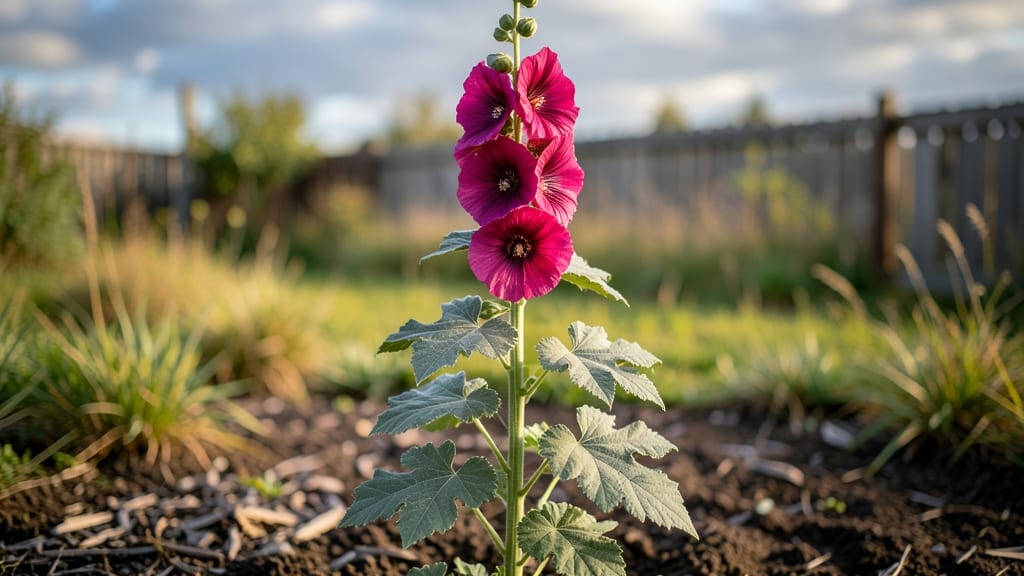
The hollyhock flower height can swing wildly—from 3 feet to a towering 8 feet—depending on the variety and growing conditions, and I learned that lesson the hard way when my first dramatic stalks collapsed in a storm. dramatic effect.
The right approach transforms them from floppy giants into sturdy vertical statement pieces, especially in containers where space is limited.
Tall varieties like 'Black Prince' and 'Chater's Double' need deep containers (at least 18 inches deep) and sturdy stakes to support their weight. Dwarf types like 'Lady of the Lake' stay under 4 feet, making them perfect for smaller pots or window boxes.
The key is matching the container size to the plant's mature height—cramped roots mean weak stems that can't support those heavy flower spikes.
With proper support, you'll end up with bold vertical accents that draw the eye upward, especially when planted near seating areas or entryways. The blooms themselves—deep burgundy, creamy white, or sunny yellow—add a touch of old-fashioned romance while keeping a modern, structured look.
Prune spent blooms regularly to encourage new growth and prevent legginess.
For container growing, place them where they'll get full sun (6+ hours daily) and protect them from strong winds. Mulch around the base to retain moisture, and fertilize lightly every 4-6 weeks during the growing season.
The payoff? Hollyhocks that stand tall, bloom profusely, and become the star of your garden without taking over the space.
📚 In This Guide
- What you need
- Instructions
- Tips and common mistakes
- Wrapping up and next steps
What you need
- ● Hollyhock seeds or seedlings: Choose tall varieties like Alcea rosea (6–8 ft) or Alcea ficifolia (8–10 ft). Start with 3–5 seeds per container (thin to the strongest seedling).
- ● Large containers: 12–18 inches deep and 12+ inches wide (e.g., fabric grow bags, ceramic pots, or wooden half-barrels). Ensure drainage holes!
- ● High-quality potting mix: 1 part garden soil + 1 part compost + 1 part perlite (for drainage and aeration). 5–10 gallons per container.
- ● Slow-release fertilizer: 10–10–10 NPK ratio (mix 1 tbsp per gallon of soil) or organic options like worm castings.
- ● Sturdy support: Cage or trellis: 6–8 ft tall (metal or wooden, e.g., tomato cages or A-frame structures).
- ● Tie-downs: Soft plant ties or twine (avoid wire—it can damage stems!).
- ● Gloves and knee pads: For comfortable handling (hollyhocks can be prickly!).
- ● Trowel or transplanting spade: For digging and soil prep.
- ● Watering can or hose with nozzle: Drip irrigation is ideal for deep watering (1–2 inches per week).
- ● Pruning shears: For deadheading spent blooms and shaping plants.
- ○ Mulch (optional): 2–3 inches of straw or shredded bark to retain moisture and suppress weeds.
- ● Sunlight access: Full sun (6+ hours/day)—hollyhocks thrive in bright, open spaces!
- ● 💡 Container hack: Add a 1-inch layer of gravel at the bottom for extra drainage.
- ● 🌡️ Climate note: Hollyhocks are hardy in zones 3–9 but may need winter protection in colder regions.
- ● 🎯 Height boost: Pinch back young seedlings to encourage bushier growth (but skip if you want single-stem giants!).
How to grow hollyhocks to their full towering height in containers
Here's how I coax those dramatic, old-fashioned blooms to reach their maximum height—even in limited spaces.
Choose the Right Container and Plant Variety
Hollyhocks thrive in deep containers—at least 18 inches tall—to support their 5-8 foot stems. I recommend fabric grow bags or heavy ceramic pots with drainage holes, as they provide stability for tall, top-heavy plants. Varieties like 'Black Prince' or 'Chater's Double' grow the tallest, while 'Lady of the Lake' stays slightly shorter but blooms prolifically.
Fill the container with well-draining potting mix—never garden soil, which compacts and suffocates roots. I blend 50% premium potting mix with 30% perlite and 20% compost for aeration and nutrients. The mix should feel light yet retain moisture when squeezed, like a damp sponge. Plant one hollyhock per container—crowding weakens stems and reduces height potential.
Plant Deeply and Stake Early for Support
Hollyhock roots grow deep, so bury the bare-root crown at least 2 inches below soil level—this encourages a strong, stable base. If using potted plants, dig a hole twice as wide as the root ball and 1 inch deeper to prevent stem rot from sitting water. Gently loosen the roots before placing them in the hole.
Install 3-4 stakes per plant immediately after planting—4-foot wooden stakes work best. Drive them 2-3 inches deep around the plant, not through the roots. Secure the main stem loosely with soft garden twine to guide growth without restricting it. Hollyhocks grow 2-3 inches per week in ideal conditions, so stakes prevent snapping in wind or rain.
Provide Full Sun and Consistent Moisture
Hollyhocks demand 6-8 hours of direct sunlight daily—no compromise here. A south-facing spot is ideal, but if your space gets only 4-6 hours, choose a shorter variety like 'Peach Blossom'. Without enough light, stems stretch weakly and produce fewer blooms. I supplement with a grow light for 14 hours/day if natural light falls short.
Water deeply once a week, soaking the entire root zone until water runs from the drainage holes. Hollyhocks hate soggy soil but also wilting—let the top 2 inches of soil dry out between waterings. Mulch with 2 inches of shredded bark to retain moisture and prevent weeds, which compete for nutrients. Overhead watering encourages fungal diseases, so use a soaker hose or water at the base.
Fertilize Strategically for Height and Blooms
Feed hollyhocks with a balanced, slow-release fertilizer (10-10-10) at planting, then switch to a low-nitrogen, high-phosphorus formula (5-10-10) when buds form. I apply ½ cup of granules per plant in early spring and again mid-summer, following package instructions. Too much nitrogen produces lush foliage but stunted blooms—the opposite of what we want.
Side-dress with compost tea every 4-6 weeks during the growing season to boost microbial activity. Hollyhocks are heavy feeders, but over-fertilizing leads to weak stems. Watch for yellowing leaves—a sign of too much nitrogen. If this happens, flush the soil with plain water and reduce feeding frequency.
Deadhead and Prune for Maximum Height
Remove spent blooms immediately by snipping the stem just above a set of leaves. This redirects energy to new flower production and prevents the plant from wasting resources on seed development. I deadhead every 2-3 days during peak bloom to keep stems strong and upright.
Prune leggy side shoots in early summer to encourage vertical growth. Cut back any stems that grow at a sharp angle from the main stalk—these weaken the plant. Avoid heavy pruning after mid-July, as new growth won’t harden off before frost. If your hollyhock develops rust spots (a common fungal issue), remove infected leaves immediately and treat with neem oil to protect the rest of the plant.
Tips & tricks for towering hollyhock blooms
Here's what I've learned after growing hollyhocks for years—the small details that make all the difference in achieving those dramatic heights.
Container Stability: In Step 1, when selecting your 18-inch deep container, prioritize weight over aesthetics. I've found that ceramic pots with a broad base (at least 12 inches wide) resist tipping better than lightweight fabric grow bags during windy conditions. For extra security, place your container on a saucer or tray—this prevents it from rocking when you brush against it. The deeper the container, the more stable the plant, but stability is about more than just depth.
Root Development Secret: The 2-inch deep planting in Step 2 isn't just about burying the crown—it's about encouraging the roots to grow downward rather than outward. I make a small trench around the root ball before backfilling with soil to create vertical growth channels. This technique helps hollyhocks develop the deep taproot system they need to support their height. Think of it as creating a natural root guide system.
Light Optimization: When dealing with the 6-8 hours of sunlight requirement in Step 3, position your container where it gets morning sun (most intense) and afternoon shade if your climate gets extremely hot. I've noticed that hollyhocks grown with this light pattern develop stronger stems and more vibrant blooms. If you're supplementing with grow lights for 14 hours, place them 6-12 inches above the plant and use full-spectrum bulbs to mimic natural sunlight.
Watering Technique: The once-weekly deep watering in Step 3 needs special attention. I've developed a simple test: stick your finger 2 inches into the soil. If it feels completely dry, it's time to water. For the deep soaking, I use a watering can with a long spout to reach all the way to the bottom of the container. This prevents surface drying while ensuring the entire root zone gets hydrated. The key is consistency—hollyhocks hate both soggy soil and drought stress.
Pro Tips for Hollyhock Flower Height
- Here's what I've learned after growing hollyhocks for years—the small details that make all the difference in achieving those dramatic heights.
- Container Stability: In Step 1, when selecting your 18-inch deep container, prioritize weight over aesthetics.
- Root Development Secret: The 2-inch deep planting in Step 2 isn't just about burying the crown—it's about encouraging the roots to grow downward rather than outward.
Frequently asked questions
Got questions about growing towering hollyhock blooms? You’re not alone! Here are answers to the most common queries about hollyhock flower height, from staking to seasonal care.
How tall do hollyhocks typically grow in containers?
Hollyhocks in containers usually reach 3–6 feet tall, depending on the variety. Dwarf cultivars like ‘Black Night’ max out at 3–4 feet, while standard types (e.g., ‘Peach Blow’) can hit 6+ feet with proper support. Pro tip: Choose compact varieties for containers to avoid toppling!
Can I prune hollyhocks to control their height?
Yes! Prune hollyhocks early in the season to encourage bushier growth and manage height. Cut back leggy stems by 1/3 to redirect energy to side shoots. Avoid heavy pruning after flowering—it may reduce bloom production. Warning: Deadhead spent blooms to extend the season but avoid over-trimming stems.
Why are my hollyhocks leaning or flopping over?
Leaning stems usually signal lack of support, poor soil, or wind exposure. Use stakes (3–4 ft tall) or cages to prop them up. Ensure well-draining soil and water at the base (not leaves) to prevent weak stems. Quick fix: Tie stems loosely to stakes with soft plant ties to avoid damage.
What’s the best way to maximize height in small pots?
For container-grown hollyhocks, choose large pots (12+ inches wide/deep) and use a balanced fertilizer (10-10-10) every 4–6 weeks. Deadhead regularly, and place pots in full sun (6+ hours/day). Bonus: Mix compost into soil for nutrients that boost vertical growth!
Are there hollyhock alternatives with similar height but easier care?
If hollyhocks seem high-maintenance, try these tall, low-fuss alternatives:
- Delphiniums: 3–5 ft tall, sturdy stems, thrive in cool climates.
- Foxgloves: 2–4 ft, biennial, self-seeds easily.
- Hollyhock hybrids (e.g., ‘Lady of the Lake’): Disease-resistant, compact.
All love full sun and well-draining soil!
Wrapping up and next steps
Hollyhock flowers can reach impressive heights—up to 10 feet or more—even in containers, with the right care! 🌿 By choosing dwarf varieties, providing sturdy support, and ensuring proper sunlight and soil, you’ll enjoy those dramatic, towering blooms without stress.
Whether you’re a beginner or a seasoned gardener, these tips make it easy to cultivate stunning hollyhocks that steal the show.
Ready to transform your space? Grab your supplies, pick a sunny spot, and get planting—your future floral masterpiece is just a few steps away! 🌸