
Picking
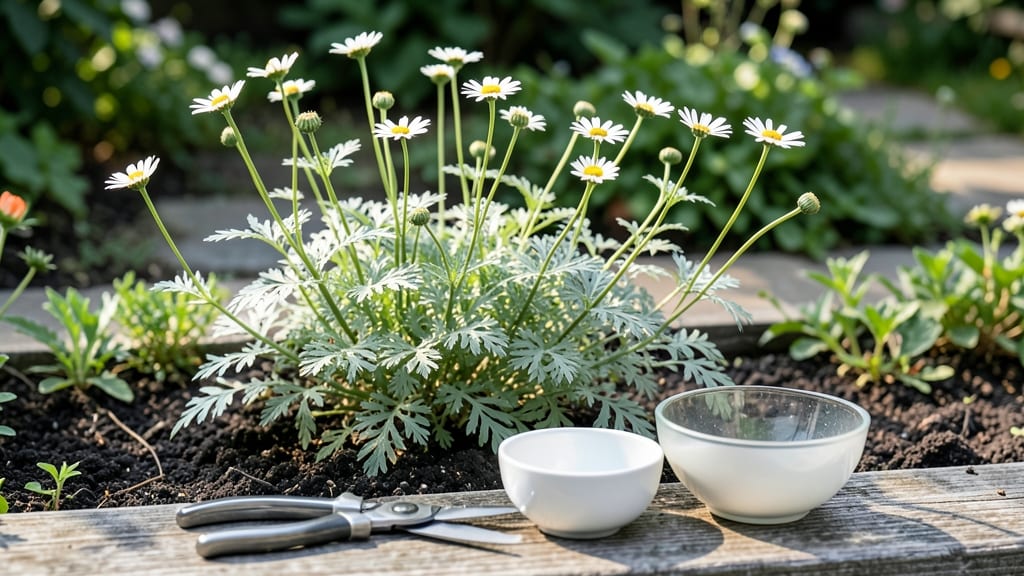
Harvesting chamomile flowers at their peak means waiting until those delicate white petals are fully open but haven't started curling back—usually by mid-morning on dry, sunny days. 🌻 I learned the hard way that harvesting too early gives you bitter tea, while waiting too long means the petals crumble when you touch them.
The right timing transforms your garden into a fragrant goldmine of medicinal blooms.
You’ll need sharp scissors or pruning shears (clean ones!), a basket or paper bag for collecting, and a sunny spot to lay out your harvest. The key is working quickly—chamomile wilts fast once cut, so gather only what you can dry in a single day.
For best results, harvest on warm, dry mornings after any morning dew has evaporated.
Once you’ve gathered your flowers, lay them in a single layer on a clean, dry surface—like a baking sheet or screen—to dry for 1-2 hours before transferring to a dark, airy space.
Properly dried chamomile should crumble easily between your fingers and smell sweetly herbal. Store in an airtight container away from light to preserve its soothing properties for months.
This method works for both tea blends and medicinal uses, and you can repeat the harvest every 2-3 weeks during the growing season. The more you practice, the more you’ll recognize that perfect moment when the flowers are at their peak—just before they start to fade.
📚 In This Guide
- What you need
- Instructions
- Tips and common mistakes
- Wrapping up and next steps
What you need
- ● Pruning shears or sharp scissors: A pair with clean, sharp blades (avoid dull tools—they crush stems and damage flowers). Recommended: 4–6 inch bypass pruners for precision.
- ○ Gloves (optional but handy): Lightweight gardening gloves to protect your hands from thorns, dirt, or mild skin irritation (some folks are sensitive to chamomile’s oils).
- ● Harvesting basket or breathable bag: A mesh or paper bag (to allow airflow) or a shallow basket to hold flowers without crushing them. Capacity: At least 1–2 gallons for a small batch.
- ● Sunny morning (or late afternoon): Chamomile blooms are most fragrant and potent when harvested after dew has dried but before the heat of midday.
- ● Water spray bottle (for cleaning): A small bottle with room-temperature water to gently rinse off dirt or debris post-harvest.
- ● Labeling tags: Tiny labels or a notebook to jot down harvest dates (great for tracking freshness if drying or storing).
- ● Drying rack or screen: A mesh screen, wooden rack, or even a clean towel to lay flowers out for air-drying (if you plan to preserve them).
- ● Sunscreen & hat: If harvesting in direct sunlight, protect yourself from UV rays—chamomile fields can get toasty!
- ● Camera or sketchbook: Capture the beauty of your chamomile blooms (or sketch them for future reference!).
Step-by-Step guide to harvesting chamomile flowers
Here's how to pick the perfect flowers for tea, medicine, or drying.
🌿 Step 1: Time Your Harvest for Peak Freshness
Wait until late morning after the dew has evaporated but before the sun reaches its strongest. Chamomile flowers open fully by 10 AM—that's when you'll find the most vibrant blooms. Avoid harvesting after noon, as the flowers start closing and lose their delicate aroma.
Check the weather first. Harvest only on dry, sunny days—rain or humidity makes the flowers damp and slows drying. If you must harvest after rain, wait until the petals are completely dry to touch. I always carry a small mesh bag to collect flowers without crushing them.
☀️ Step 2: Choose the Right Flowers to Pick
Look for fully open flower heads with bright yellow centers and white petals spread wide. These are at their peak flavor and potency. Avoid picking buds that haven't opened yet—they won't have the same soothing properties.
Leave at least 1-2 inches of stem attached to each flower head. This helps them dry properly and prevents the stems from snapping when you handle them. I snip with clean scissors just above a leaf node to encourage bushier growth. Never pull flowers by hand—it can damage the plant.
💧 Step 3: Handle Flowers Gently for Best Results
Place harvested flowers immediately into a paper bag or breathable mesh container—plastic traps moisture and causes mold. If you're drying them, spread the flowers in a single layer on a clean, dry surface like a screen or baking sheet. Keep them out of direct sunlight to prevent fading.
For fresh use, store flowers in the fridge wrapped in a damp paper towel inside a sealed container. They'll stay fresh for up to 5 days this way. If you're making tea immediately, pluck the petals off the stems and steep them in hot (not boiling) water for 5-10 minutes to preserve their delicate flavor.
⏰ Step 4: Encourage Future Harvests
After harvesting, water the plant deeply to help it recover. Chamomile thrives with regular but moderate watering—about 1 inch per week, more if it's extremely hot. The plant will regrow quickly, often producing 2-3 harvests per season if cared for properly.
Trim back any leggy or overgrown stems after harvesting to encourage bushier growth. This also prevents the plant from becoming top-heavy, which can lead to flopping in windy conditions. A light application of balanced fertilizer (10-10-10) after each harvest keeps the plant vigorous.
Tips & tricks for perfect chamomile flower harvesting
Between us, the difference between mediocre chamomile and truly exceptional blooms often comes down to these small but critical details.
Timing Secret: I can't stress enough how important that 10 AM window is in Step 1. The flowers open fully by then, but here's what nobody tells you—if you're harvesting for tea, wait until the petals are slightly drooping by mid-morning. This subtle sign means the essential oils are at their peak concentration. The aroma test works too: give a bloom a gentle sniff right at 10 AM, then again at 11 AM. You'll notice the difference immediately.
Selection Tip: In Step 2, when you're looking for fully open flower heads, focus on the petals' texture too. The very best blooms have petals that feel almost papery to the touch. Run your thumb along the edges—if they're slightly crispy at the tips, that's your sign of peak freshness. And here's a pro move: harvest from the outer edges of the plant first, working your way inward. This encourages the center flowers to open more fully for your next harvest.
Drying Strategy: For Step 3's drying process, I've found that a simple window screen works better than a baking sheet—it allows air to circulate from both sides. If you're short on space, hang small bundles upside down from a string in a dry, dark place. The flowers will dry faster this way, and you'll avoid the risk of them sticking to a flat surface. Just remember to shake them gently every few hours to prevent mold from forming in those tight clusters.
Storage Wisdom: That damp paper towel trick in Step 3 for fresh storage is brilliant, but here's the bonus: if you're planning to use the flowers within 24 hours, you can skip the towel entirely. Just wrap them in a dry paper towel and store in a sealed container. The natural moisture from the flowers themselves will keep them fresh longer. For long-term storage beyond 5 days, freeze the dried flowers in an airtight container—they'll keep their potency for up to 6 months.
Pro Tips for Harvest Chamomile Flowers
- Between us, the difference between mediocre chamomile and truly exceptional blooms often comes down to these small but critical details.
- Timing Secret: I can't stress enough how important that 10 AM window is in Step 1.
- Selection Tip: In Step 2, when you're looking for fully open flower heads, focus on the petals' texture too.
Frequently asked questions
Got questions about harvesting chamomile? You’re not alone! Here are answers to the most common queries to help you harvest like a pro.
When is the best time of day to harvest chamomile?
The absolute best time is early morning after the dew has dried but before the sun gets too hot (around 8–10 AM). This ensures the flowers are fully open, hydrated, and packed with essential oils. Avoid harvesting after rain—the petals can be soggy and prone to mold.
How often should I harvest chamomile from the same plant?
Harvest chamomile every 3–4 weeks during peak bloom (spring to early fall). If you cut too much at once, the plant may struggle to recover. For continuous harvests, leave at least 2–3 inches of foliage to encourage regrowth. Over-harvesting weakens the plant and reduces future yields.
Can I harvest chamomile if it’s not fully open?
Yes, but only if you’re drying them for tea or crafts. Partially open buds still contain essential oils, though fully bloomed flowers have a sweeter, more potent flavor. For medicinal uses (like tea), prioritize fully open flowers with bright yellow centers. If you must harvest buds, let them finish blooming on the plant first.
What should I do if it rains right before harvest time?
Wait 24–48 hours after rain to harvest—wet flowers take longer to dry and may develop mold. If you’re in a hurry, gently shake off excess moisture with your hands or use a clean towel. Avoid harvesting in damp conditions unless you’re prepared to dry them slowly (e.g., in a well-ventilated, shaded area).
Can I harvest chamomile from a store-bought plant?
Technically yes, but it’s not ideal. Store-bought chamomile (like those in grocery stores) is often treated with pesticides or grown in poor conditions, which can affect flavor and safety. For the best results, grow your own from organic seeds or transplants. If you must use a store-bought plant, rinse the flowers thoroughly before drying.
Wrapping up and next steps
Harvesting chamomile flowers at their peak—bright, fragrant, and full of potential—is simpler than you think!
By following the right timing, tools, and techniques, you’ll unlock the soothing power of these golden blooms for teas, remedies, or even your garden. Now that you’re ready, why not turn your harvest into something special?
- 🌿 Dry & Preserve: Experiment with drying methods (hanging, oven, or dehydrator) to store your chamomile for later.
- 🍵 Brew a Batch: Steep your freshly picked flowers in hot water and enjoy a calming cup of homemade chamomile tea.
- 💡 Share the Love: Gift dried chamomile bundles or sachets to friends—nature’s little stress relievers!
Your garden (and your senses) will thank you! 🌞