
Flowers
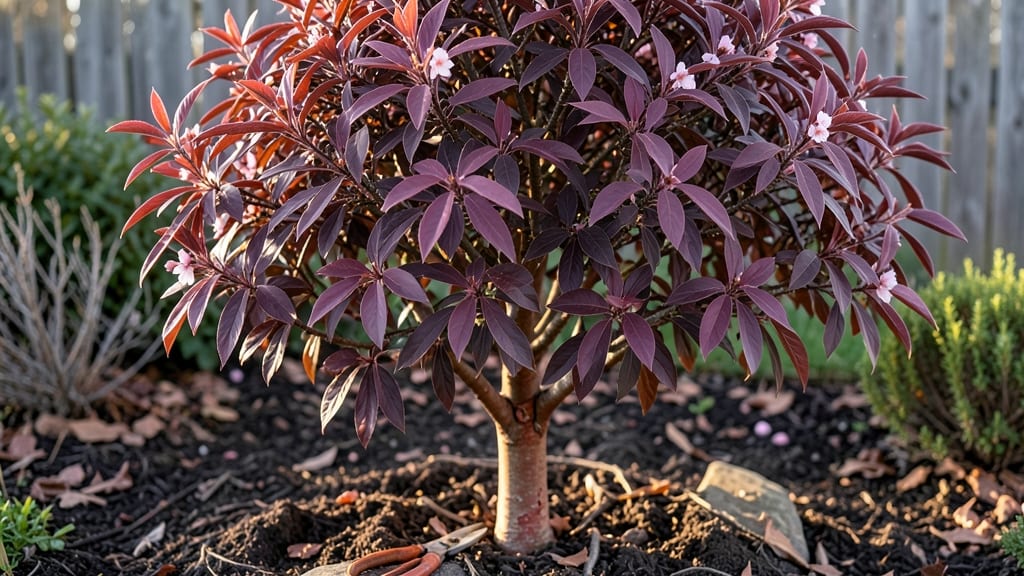
Purple leaf plum flowers bring bold, year-round drama to gardens with their striking foliage and spring blooms—no fancy pruning required. 🌿 I planted mine last spring, and the deep purple leaves still turn heads in winter, while the delicate pink flowers in spring make neighbors ask, "What is that?"
The secret? This tree thrives on neglect once established, but a few simple steps at planting time set it up for decades of color.
The real magic happens with sunlight and soil—this plum loves full sun (at least 6 hours daily) and well-draining soil. Amend heavy clay with compost, and avoid soggy spots. Water deeply once a week after planting, then taper off as roots establish.
Unlike fussy ornamentals, it tolerates drought once settled, making it perfect for low-maintenance landscapes. My tree in zone 6 hasn’t needed extra care beyond an annual mulch layer to keep roots cool.
You’ll get spring blooms and vibrant foliage with minimal effort—just shape it lightly after flowering to maintain its natural form. The flowers attract pollinators, and the foliage provides four-season interest, from spring blossoms to winter silhouette.
Even in tight spaces, this small tree (15–20 feet tall) fits beautifully as a specimen or street tree. The best part? It rarely gets pests or diseases, so you won’t waste time spraying or treating.
Works in urban yards, cottage gardens, or as a privacy screen—just plant it where you’ll see it daily. The purple leaves alone make it a standout, but the spring flowers add a romantic touch. Here’s how to keep it thriving with almost no work after the first year.
📚 In This Guide
- What you need
- Instructions
- Tips and common mistakes
- Wrapping up and next steps
What you need
- ● Purple leaf plum tree (choose a Prunus cerasifera cultivar like 'Atropurpurea' or 'Newportii'). Option: Seeds (slower growth) or a 1-3 gallon container-grown tree (faster results).
- ● Well-draining soil (pH 6.0–7.0). Mix 1 part native soil with 1 part compost and 1 part coarse sand for optimal drainage.
- ○ Fertilizer (balanced 10-10-10 or slow-release granular). Optional: Organic options like bone meal or worm castings.
- ● Mulch (2–3 inches of wood chips or shredded bark to retain moisture and regulate soil temp).
- ● Garden trowel or shovel (for digging holes).
- ○ Pruning shears (sterilized with rubbing alcohol). Optional: Loppers for thicker branches.
- ● Watering can or hose with a gentle spray nozzle (avoid over-saturating roots).
- ● Garden gloves (to protect hands from thorns and soil).
- ● Measuring tape (to ensure proper spacing—15–20 feet apart for mature trees).
- ● Stakes & twine (if planting in windy areas).
- ● Sunlight: Full sun (6+ hours daily). Partial shade (4–6 hours) may reduce flowering.
- ● Climate: Hardy in USDA Zones 5–9. Protect young trees from frost with burlap wraps if needed.
- ● Space: Account for mature height (15–25 feet) and spread (15–20 feet).
- ● Water source: Consistent access for the first 2–3 years (deep watering 1–2x/week).
Step-by-step guide to planting and caring for purple leaf plum trees
Here's how to establish these stunning trees for vibrant blooms with almost no fuss.
🌱 Step 1: Choose the Perfect Planting Spot
Purple leaf plums thrive in full sun—at least 6 hours of direct light daily—so pick a location with southern or western exposure. I always test the site by observing how much sun it gets over a week before planting. The tree's purple foliage deepens in color with more sunlight, so don't skimp here.
Your soil should drain well—these trees hate soggy roots. If your yard has heavy clay, amend with 3-4 inches of compost mixed into the top 12 inches of soil. The planting hole should be twice as wide as the root ball but no deeper. Loosen the sides of the hole with a shovel to encourage root spread.
🪴 Step 2: Plant at the Right Depth and Stake for Support
Remove the tree from its container and gently tease the roots outward if they're circling. Place it in the hole so the top of the root ball sits 1-2 inches above ground level—this prevents stem rot. Backfill with native soil, tamping lightly every 4-6 inches to remove air pockets.
Water deeply to settle the soil, then add a 2-inch layer of mulch (keeping it 6 inches away from the trunk) to retain moisture. Install a 4-foot stake on the tree's north side and secure it loosely with flexible ties. Purple leaf plums grow 15-25 feet tall, so sturdy support prevents wind damage in their first season.
☀️ Step 3: Water Deeply and Establish a Consistent Routine
Water 2-3 times per week for the first 30 days, providing 1-2 gallons per watering to encourage deep root growth. After that, reduce to once a week unless your area experiences 3+ days without rain. The key is deep, infrequent watering—never let the soil stay soggy, but don't let it dry out completely either.
You'll know your watering is right when the top 2 inches of soil feel dry to the touch between sessions. Overwatering causes root rot, while underwatering stresses the tree and dulls its signature purple foliage. After the first year, these trees become quite drought-tolerant once established.
✂️ Step 4: Prune Only When Necessary for Health
Purple leaf plums need minimal pruning—just remove dead, diseased, or crossing branches in late winter or early spring. Use clean, sharp pruners to make cuts just outside the branch collar. I never remove more than 25% of the tree's canopy in one season, as this stresses the plant and reduces flowering.
Watch for weak growth or branches growing inward—they'll compete with sunlight and air circulation. Prune these back to a strong outward-facing bud. The tree's natural shape is beautiful, so avoid heavy shaping cuts. After pruning, apply a copper fungicide spray to prevent infections from fresh cuts.
🌿 Step 5: Fertilize Lightly for Vibrant Blooms
Apply a balanced 10-10-10 fertilizer in early spring, using ½ cup per inch of trunk diameter. For example, a 3-inch diameter trunk gets 1½ cups spread evenly in a 12-inch circle around the base. Water thoroughly after application to prevent root burn.
Skip summer fertilizing—these trees bloom best when they're not forced into excessive growth. In fall, add a 2-inch layer of compost around the drip line to replenish nutrients naturally. The tree's purple leaves will stay richest when it receives moderate, consistent feeding rather than heavy doses.
Tips & tricks for perfect purple leaf plum flowers
These small adjustments make all the difference when nurturing your plum tree's stunning foliage.
Sunlight Optimization: The 6 hours of direct sunlight mentioned is non-negotiable for that signature purple hue. If your yard has partial shade, position the tree where it gets morning sun and afternoon shade—this still works but may result in slightly less vibrant leaves. I've seen trees in east-facing locations thrive with morning light alone, though they'll never match the intensity of full southern exposure. Consider adding a reflective surface nearby (like a white wall) to bounce extra light onto the tree's canopy.
Soil Preparation Secret: For heavy clay soils, don't just top-dress with compost—mix that 3-4 inches of compost into the top 12 inches of soil as directed. This creates a proper rooting zone where water drains freely but nutrients stay available. I've had clients skip this step and end up with yellowing leaves by summer—the roots just can't breathe in compacted soil. A simple soil test before planting can tell you exactly what amendments your yard needs beyond compost.
Watering Technique: That 2-3 times per week for the first 30 days might seem like a lot, but it's crucial for establishing deep roots. Use a rain gauge or tuna can to measure your 1-2 gallons per watering—eyeballing it often leads to either soggy soil or underwatering. I recommend watering in the early morning so the leaves have time to dry before evening, which helps prevent fungal issues. A soaker hose placed at the drip line is perfect for this—it delivers water right where the roots need it without wetting the foliage.
Pruning Precision: When removing those dead, diseased, or crossing branches in Step 4, make your cuts just outside the branch collar at a 45-degree angle. This encourages faster healing and prevents water from pooling at the cut site. I've seen too many trees develop cankers from improper pruning cuts—always use clean, sharp tools and make cuts where you can see the slight swelling at the branch base. The copper fungicide spray after pruning is your insurance policy against infections from fresh wounds.
Pro Tips for Purple Leaf Plum Flowers
- These small adjustments make all the difference when nurturing your plum tree's stunning foliage.
- Sunlight Optimization: The 6 hours of direct sunlight mentioned is non-negotiable for that signature purple hue.
- Soil Preparation Secret: For heavy clay soils, don't just top-dress with compost—mix that 3-4 inches of compost into the top 12 inches of soil as directed.
Frequently asked questions
Got questions about growing and caring for purple leaf plum flowers? You’re not alone! Here are some of the most common queries—and their answers—to help you keep your tree thriving with stunning color year-round.
When do purple leaf plum flowers bloom, and how long do they last?
Purple leaf plums typically bloom in early spring (March–April in most zones), with clusters of pink or white flowers lasting 2–3 weeks. The foliage, however, provides year-round color—deep purple in spring/summer, shifting to burgundy or bronze in fall/winter. Prune after blooming to avoid cutting off next year’s flowers!
How much sun do purple leaf plums need, and what if mine isn’t blooming?
These trees thrive in full sun (6+ hours/day), but they’ll tolerate partial shade (4–6 hours). If your tree isn’t blooming, check these fixes:
- Age: Young trees (under 3 years) may not bloom yet—be patient!
- Pruning timing: Prune after flowering to encourage new growth.
- Fertilizer: Use a balanced, low-nitrogen fertilizer in early spring.
- Stress: Overwatering or poor drainage can reduce blooms.
Are purple leaf plums cold-hardy? Can they survive winter?
Yes! These trees are highly cold-hardy, typically surviving USDA Zones 5–9. In extreme cold (<10°F), young trees may need winter mulch (2–3 inches of shredded bark) to protect roots. No winter pruning is needed—they’re dormant and resilient!
What’s the best way to prune purple leaf plums to keep them healthy and colorful?
Prune only in late winter or early spring (just after blooming) to:
- Remove dead, crossing, or weak branches first.
- Thin out overcrowded areas for airflow.
- Avoid heavy pruning—these trees bloom on old wood, so limit cuts to 20–30% of the canopy.
Why are the leaves on my purple leaf plum turning yellow or brown?
Yellowing leaves often signal overwatering or nutrient deficiencies, while brown edges may mean underwatering, salt buildup, or fungal issues. Try these fixes:
- Check soil moisture: Water deeply but only when the top 2–3 inches are dry.
- Test soil pH: Aim for 6.0–7.0; amend with lime or sulfur if needed.
- Inspect for pests: Spider mites or scale can stress the tree—treat with neem oil if spotted.
- Fertilize: Use a slow-release, iron-rich fertilizer for greener foliage.
Wrapping up and next steps
Purple leaf plum flowers are a stunning, low-maintenance way to bring vibrant color to your garden—without the fuss of constant pruning! 🌸 With the right soil, sunlight, and a little seasonal care, you’ll enjoy their breathtaking blooms (and foliage!) for years. Whether you’re a beginner or a seasoned gardener, these trees are a game-changer for year-round beauty.
Ready to transform your outdoor space? Start by planting one today—then watch your garden thrive with minimal effort. Happy gardening! 🌿