Flowers
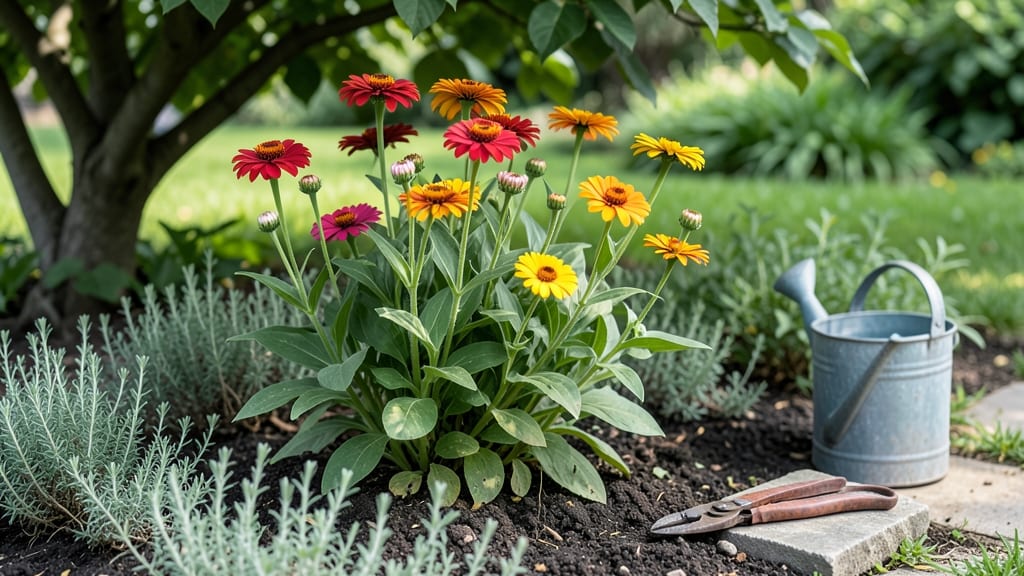
Zinnia flower care starts with the right approach—these bold blooms thrive with minimal fuss once you know their simple needs. I learned the hard way that zinnias don’t need coddling, just consistent sunlight and occasional deadheading to keep them flowering like crazy all season.
The first time I saw my zinnias towering over my neighbors’ petunias, I knew I’d cracked the code.
You’ll need well-draining soil, a sunny spot (at least 6 hours of direct sun daily), and regular watering—about 1 inch per week—but never soggy roots. Zinnias are drought-tolerant once established, so they’re perfect for busy gardeners.
The secret to their long-lasting blooms? Snipping spent flowers back to fresh growth encourages even more vibrant blooms to take their place.
By summer’s end, you’ll have a garden packed with jewel-toned blooms in every shade from fiery red to deep purple. These flowers attract butterflies, last through cutting for vase arrangements, and even hold up well in heat waves. The best part? They’re beginner-friendly—no fancy techniques required.
Whether you’re growing zinnias in beds, containers, or even as cut flowers, this care routine works year-round in warm climates. For cooler regions, treat them as annuals and start seeds indoors 6-8 weeks before your last frost. Let’s get those seeds planted—or at least those deadheads clipped!
📚 In This Guide
- What you need
- Instructions
- Tips and common mistakes
- Wrapping up and next steps
What you need
- ● Zinnia seeds or seedlings: Choose disease-resistant varieties like Benary’s Giant or Profusion. Start with 5–10 seeds per pot (or 1–2 seedlings per plant) for a full bloom.
- ● Well-draining potting mix: A 5-gallon bag of high-quality, organic soil blend (e.g., Miracle-Gro Potting Mix) works best.
- ● Containers or garden bed: For containers: Use pots 6+ inches deep with drainage holes (e.g., 3–5 gallon pots for 1–2 plants each).
- ● For garden beds: Ensure 6+ hours of sunlight and loose, fertile soil with a pH of 6.0–7.0.
- ● Watering can or hose with a gentle spray nozzle: Zinnias hate soggy roots—aim for 1 inch of water per week (adjust for rain).
- ● Fertilizer: Balanced, water-soluble fertilizer (e.g., 10-10-10) for seedlings.
- ● Low-nitrogen, high-phosphorus fertilizer (e.g., 5-10-10) once blooms appear.
- ● Pruning shears: For deadheading spent blooms (look for bypass-style shears for clean cuts).
- ● Gloves: Protect your hands from thorns (especially on Zinnia elegans varieties).
- ○ Mulch (optional): 2–3 inches of straw or shredded leaves to retain moisture and suppress weeds.
- ● Stakes or cages: Tall varieties (e.g., State Fair) may need support—use 5–6 ft stakes or tomato cages.
- ○ Seedling heat mat (optional): If starting indoors, a mat set to 70–75°F speeds up germination.
How to maintain zinnias for continuous, vibrant blooms
Here’s the straightforward approach I’ve used to keep zinnias flowering nonstop—no fancy tricks, just reliable results.
Plant in Well-Draining Soil With Full Sun Exposure
Zinnias thrive when planted in soil that drains quickly but retains enough moisture to prevent wilting. Mix in a handful of compost into the planting hole to give roots a nutrient boost without compacting the soil. Press the soil gently around the base of each plant to eliminate air pockets—this ensures roots establish contact with moisture right away.
Choose a location with at least 6 hours of direct sunlight daily. Morning sun paired with afternoon shade works best in hot climates, but zinnias will tolerate full sun if given consistent water. If your garden bed gets afternoon shade, you’ll notice stems staying sturdier and flowers lasting longer in the vase.
Water Deeply at the Base, Not the Leaves
Water zinnias deeply at the soil level every 2-3 days during active growth, adjusting for heat or drought. The top 1-2 inches of soil should feel dry to the touch before watering again—this prevents shallow root systems that lead to flopping stems. A soaker hose or drip irrigation keeps foliage dry, reducing fungal risks like powdery mildew.
Here’s the thing—zinnias hate wet leaves. If you water overhead, the foliage stays damp for hours, creating the perfect environment for diseases. I always water in the early morning so any moisture on leaves dries quickly. You’ll see healthier plants and fewer brown spots on leaves within a week of adjusting your watering method.
Deadhead Regularly to Encourage Nonstop Blooms
Pinch or snip off spent blooms just above the first set of healthy leaves using clean, sharp scissors or fingers. This redirects the plant’s energy from seed production to growing new flowers. I deadhead zinnias every 2-3 days during peak bloom—it’s the secret to keeping them flowering until frost.
Watch for the first signs of wilting or color fade in individual blooms. That’s your cue to remove them immediately. If you wait until the entire flower head turns brown, the plant will have already shifted focus to seed development, slowing new bloom production. Strong zinnias will reward you with fresh flowers within 3-5 days of consistent deadheading.
Fertilize Lightly and Prune for Bushier Growth
Feed zinnias with a balanced, water-soluble fertilizer (10-10-10) every 3-4 weeks during the growing season. Too much nitrogen makes them grow lush foliage at the expense of flowers, so I halve the recommended dose. Apply fertilizer after watering to prevent root burn—always dilute it to half-strength for zinnias.
Pinch back the tips of young plants when they reach 6 inches tall to encourage bushier growth. This simple step prevents leggy stems and creates more branching for abundant blooms. You’ll see new side shoots forming within 10-14 days of pruning. Avoid heavy pruning later in the season—zinnias bloom best on new growth, so focus on removing only the oldest, most woody stems.
Monitor for Pests and Adjust Care as Needed
Zinnias attract aphids and spider mites, but a strong jet of water usually dislodges them. I inspect plants weekly for signs of infestation—look for sticky residue on leaves (aphids) or fine webbing (spider mites). If you spot pests, treat with neem oil or insecticidal soap, applying it in the early evening to avoid harming beneficial insects.
In hot climates, zinnias may go dormant during peak summer heat. If leaves start yellowing or wilting despite consistent water, provide light afternoon shade and reduce watering slightly. Once temperatures drop below 85°F, return them to full sun and resume regular care. This adjustment keeps them blooming well into fall.
Tips & tricks for perfect zinnia care
Here’s what I’ve learned after years of growing zinnias that keep blooming like clockwork—without the guesswork.
Soil Preparation: When mixing compost into the planting hole, aim for about one-third compost to two-thirds native soil. Too much compost can create a dense, waterlogged environment that roots hate. I also recommend adding a handful of perlite or coarse sand to improve drainage—this prevents the classic zinnias wilting issue caused by soggy roots. The goal is a loose, airy soil that lets water drain freely while still holding enough moisture.
Sunlight Strategy: If your zinnias start looking stressed in full sun, don’t just assume they need more shade—check your soil first. Dry, sandy soil can bake roots even with perfect sun exposure. In hot climates, I’ve found that mulching with 2-3 inches of straw around the base helps retain moisture and keeps roots cool. This simple step can extend your blooming season by several weeks without sacrificing sunlight.
Deadheading Timing: The 2-3 day deadheading schedule works perfectly when temperatures stay moderate, but in extreme heat (above 90°F), you can stretch it to every 4 days without sacrificing bloom production. Just watch for the first signs of wilting—those are your cues to act. Pro tip: Use clean, sharp scissors to avoid crushing stems, which can introduce diseases through open wounds.
Fertilizer Precision: That half-strength 10-10-10 fertilizer recommendation is non-negotiable—zinnias are sensitive to over-fertilizing. I’ve ruined batches by using full strength, resulting in leafy growth with almost no flowers. Apply fertilizer after watering to prevent root burn, and always water thoroughly afterward to help distribute nutrients evenly through the soil.
Pro Tips for Zinnia Flower Care
- Here’s what I’ve learned after years of growing zinnias that keep blooming like clockwork—without the guesswork.
- Soil Preparation: When mixing compost into the planting hole, aim for about one-third compost to two-thirds native soil.
- Sunlight Strategy: If your zinnias start looking stressed in full sun, don’t just assume they need more shade—check your soil first.
Frequently asked questions
Got questions about keeping your zinnias thriving? You’re not alone! Here are answers to the most common zinnia care queries—so you can enjoy those bold blooms with confidence.
How often should I water zinnias, and how do I know when they need it?
Water zinnias deeply 1-2 times per week, letting the soil dry out slightly between waterings. Stick your finger 1-2 inches into the soil—if it’s dry, it’s time to water. Overwatering is the #1 killer! Mornings are best to prevent fungal issues, and mulch helps retain moisture.
When is the best time to plant zinnias for continuous blooms?
Zinnias are warm-season lovers—plant them after the last frost (when soil temps hit 50°F or warmer). For year-round blooms, succeeding plantings every 2-3 weeks (until mid-summer) ensures fresh flowers. Pro tip: Start seeds indoors 4-6 weeks before the last frost for an early jump!
What are the most common pests for zinnias, and how do I get rid of them?
Watch for aphids, spider mites, and Japanese beetles. For mild infestations, blast them off with water or use insecticidal soap. Neem oil is a natural deterrent, and row covers can protect seedlings. Pro tip: Encourage ladybugs and lacewings—they’re zinnia’s best pest-fighting friends!
Can I grow zinnias in containers, and what’s the best setup?
Zinnias thrive in 5-7 gallon containers with well-draining soil and a supportive trellis for taller varieties. Use a balanced fertilizer (like 10-10-10) every 4-6 weeks. Dwarf zinnias (like ‘Thumbelina’) are perfect for small pots—just ensure they get 6+ hours of sun daily.
Why are my zinnia leaves turning yellow, and how do I fix it?
Yellow leaves usually mean overwatering, nutrient deficiency, or disease. First, check the roots—soggy soil = root rot. If leaves are crispy or brown, it’s underwatering. For yellowing with spots or wilting, it could be powdery mildew—spray with baking soda mix (1 tsp baking soda + 1 quart water) or neem oil. Pro tip: Prune affected leaves to improve airflow!
Are zinnias annuals or perennials, and can I save seeds for next year?
Zinnias are annuals in most climates (except zones 8-11, where they may return). Yes, save seeds! Let some flowers go to seed (the center turns brown and papery), then collect and dry the seeds in a paper bag. Store in a cool, dark place—they’ll last 2-3 years! Pro tip: Label varieties to avoid surprises next season.
Wrapping up and next steps
Caring for zinnia flowers doesn’t have to be complicated—just a little love and consistency go a long way! With the right sunlight, soil, and watering routine, you’ll enjoy bold, vibrant blooms that brighten up any space.
Whether you’re a seasoned gardener or a beginner, these tips ensure your zinnias thrive year-round with minimal fuss.
Now that you’re armed with the know-how, roll up your sleeves and get planting! 🌸 Start small—try a few pots or a garden bed—and watch your zinnias reward you with stunning color and joy. Happy gardening!